
‘FIBROID UTERUS’ CAN BE CURED BY HOMEOPATHY

What are fibroids?
Fibroids are muscular tumors that grow in the wall of the
uterus (womb). Another medical
term for fibroids is "leiomyoma" (leye-oh-meye-OH-muh) or just
"myoma". Fibroids are almost always benign (not cancerous). Fibroids
can grow as a single tumor, or there can be many of them in the uterus. They
can be as small as an apple seed or as big as a grapefruit. In unusual cases
they can become very large.


Why should women know about fibroids?
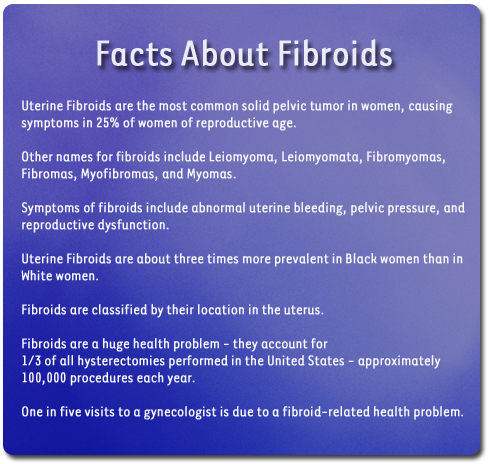
About 20 percent to 80 percent of women develop fibroids
by the time they reach age 50. Fibroids are most common in women in their 40s
and early 50s. Not all women with fibroids have symptoms. Women who do have
symptoms often find fibroids hard to live with. Some have pain and heavy
menstrual bleeding. Fibroids also can put pressure on the bladder, causing frequent
urination, or the rectum, causing rectal pressure. Should the fibroids get very
large, they can cause the abdomen (stomach area) to enlarge, making a woman
look pregnant.
There are factors that
can increase a woman's risk of developing fibroids.
- Age.
Fibroids become more common as women age, especially during the 30s and
40s through menopause. After menopause, fibroids usually shrink.
- Family
history. Having a family member with fibroids increases your
risk. If a woman's mother had fibroids, her risk of having them is about
three times higher than average.
- Ethnic
origin. African-American women are more likely to develop
fibroids than white women.
- Obesity.
Women who are overweight are at higher risk for fibroids. For very heavy
women, the risk is two to three times greater than average.
- Eating
habits. Eating a lot of red meat (e.g., beef) and ham is
linked with a higher risk of fibroids. Eating plenty of green vegetables
seems to protect women from developing fibroids.
Most
fibroids grow in the wall of the uterus. Doctors put them into three groups
based on where they grow:
- Submucosal , fibroids grow into the uterine cavity.
- Intramural , fibroids grow within the wall of the uterus.
- Subserosal , fibroids grow on the outside of the uterus.
Some fibroids grow on stalks that grow out from the
surface of the uterus or into the cavity of the uterus. They might look like
mushrooms. These are called pedunculated fibroids.
What are the symptoms of fibroids?
Most fibroids do not
cause any symptoms, but some women with fibroids can have:
- Heavy bleeding (which can be heavy
enough to cause anemia)
or painful periods
- Feeling of fullness in the pelvic
area (lower stomach area)
- Enlargement of the lower abdomen
- Frequent urination
- Pain during sex
- Lower back pain
- Complications during pregnancy and
labor, including a six-time greater risk of cesarean section
- Reproductive problems, such as infertility,
which is very rare
No one knows for sure what causes fibroids. Researchers
think that more than one factor could play a role. These factors could be:
- Hormonal (affected by estrogen
and progesterone
levels)
- Genetic (runs in families)
Because no one knows for
sure what causes fibroids, we also don't know what causes them to grow or
shrink. We do know that they are under hormonal control — both estrogen and
progesterone. They grow rapidly during pregnancy, when hormone levels are high.
They shrink when anti-hormone medication is used. They also stop growing or
shrink once a woman reaches menopause.
Fibroids are almost
always benign (not cancerous). Rarely (less than one in 1,000) a cancerous fibroid
will occur. This is called leiomyosarcoma (leye-oh-meye-oh-sar-KOH-muh).
Doctors think that these cancers do not arise from an already-existing fibroid.
Having fibroids does not increase the risk of developing a cancerous fibroid.
Having fibroids also does not increase a woman's chances of getting other forms
of cancer in the uterus.
Women who have fibroids are more likely to have problems
during pregnancy and delivery. This doesn't mean there will be problems. Most
women with fibroids have normal pregnancies. The most common problems seen in
women with fibroids are:
- Cesarean
section. The risk of needing a c-section is six times
greater for women with fibroids.
- Baby is
breech. The baby is not positioned well for vaginal
delivery.
- Labor fails
to progress.
- Placental
abruption. The placenta breaks away from the wall of the
uterus before delivery. When this happens, the fetus does not get enough
oxygen.
- Preterm
delivery.
Talk to your
obstetrician if you have fibroids and become pregnant. All obstetricians have
experience dealing with fibroids and pregnancy. Most women who have fibroids and
become pregnant do not need to see an OB who deals with high-risk pregnancies.
Your doctor may find that you have fibroids when you see
her or him for a regular pelvic exam to check your uterus, ovaries, and vagina.
The doctor can feel the fibroid with her or his fingers during an ordinary
pelvic exam, as a (usually painless) lump or mass on the uterus. Often, a
doctor will describe how small or how large the fibroids are by comparing their
size to the size your uterus would be if you were pregnant. For example, you
may be told that your fibroids have made your uterus the size it would be if
you were 16 weeks pregnant. Or the fibroid might be compared to fruits, nuts,
or a ball, such as a grape or an orange, an acorn or a walnut, or a golf ball
or a volleyball.
Your doctor can do
imaging tests to confirm that you have fibroids. These are tests that create a
"picture" of the inside of your body without surgery. These tests
might include:
- Ultrasound
– Uses sound waves to produce the picture. The ultrasound probe can be
placed on the abdomen or it can be placed inside the vagina to make the
picture.
- Magnetic
resonance imaging (MRI) – Uses magnets and radio
waves to produce the picture
- X-rays
– Uses a form of radiation to see into the body and produce the picture
- Cat scan
(CT) – Takes many X-ray pictures of the body from different angles for a
more complete image
- Hysterosalpingogram
(hiss-tur-oh-sal-PIN-juh-gram) (HSG) or sonohysterogram
(soh-noh-HISS-tur-oh-gram) – An HSG involves injecting x-ray dye into the
uterus and taking x-ray pictures. A sonohysterogram involves injecting
water into the uterus and making ultrasound pictures.
You might also need
surgery to know for sure if you have fibroids. There are two types of surgery
to do this:
- Laparoscopy
(lap-ar-OSS-koh-pee) – The doctor inserts a long, thin scope into a tiny
incision made in or near the navel. The scope has a bright light and a
camera. This allows the doctor to view the uterus and other organs on a
monitor during the procedure. Pictures also can be made.
- Hysteroscopy (hiss-tur-OSS-koh-pee)
– The doctor passes a long, thin scope with a light through the vagina and
cervix into the uterus. No incision is needed. The doctor can look inside
the uterus for fibroids and other problems, such as polyps. A camera also
can be used with the scope.
Most women with fibroids do not have any symptoms. For
women who do have symptoms, there are treatments that can help. Talk with your
doctor about the best way to treat your fibroids. She or he will consider many
things before helping you choose a treatment. Some of these things include:
- Whether or not you are having
symptoms from the fibroids
- If you might want to become
pregnant in the future
- The size of the fibroids
- The location of the fibroids
- Your age and how close to
menopause you might be
If you have fibroids but
do not have any symptoms, you may not need treatment. Your doctor will check
during your regular exams to see if they have grown.

Yes homeopathy can cure uterine fibroid. Unlike allopathy, homeopathy is not
readymade but tailor-made to suit an individual. Therefore in homeopathy two
people are unlikely to be prescribed the same remedy. One remedy may be
prescribed constitutionally for general bodily imbalances and another remedy
may be prescribed simultaneously for specific, acute symptoms. On the
subsequent visit the remedies may be changed depending upon the progress of the
patient. Thus, we can say that in homeopathy we use designer remedies designed
especially for an individual.
Homeopathic treatment for Uterine
Fibroids is very efficient, non-invasive, safe and inexpensive. Homeopathic
remedies encourage blood flow to the pelvis and will counteract Oestrogen
dominance. It will promote the immune function and maintain Uterine health. Homeopathic
constitutional treatment can shrink the Fibroid, stop the unwanted growths,
clean up the Uterus, balance the female hormonal levels and will enable you to
continue living with your reproductive organs as a whole by not allowing the
Uterine Fibroids to appear again. The goal of this Homeopathic approach is to
enliven the body's natural healing and self-repair ability to treat the
underlying condition, to prevent it and to create the highest state of health
and well-being. Homeopathy is reassuring and helpful
for both physical and emotional aspects, and most women, in addition to relief
from their Fibroids, experience an enhancement in self-awareness and well being
after the treatment.
Sepia,
pulsatilla, natrum mur, lachesis, phosphorus, lycopodium, medorrhinum are most
commonly used medicines.
Any information given above is not intended
to be taken as a replacement for medical advice. There for it is very important
that the patient should avoid self treatment and rather contact a qualified classical
homoeopath and take treatment under his proper guidance and advice.
For more details mail us
If you like this article
just click +1 button

Subscribe to:
Post Comments
(
Atom
)


I had fibroid for over 6 years and I have had countless miscarriages. All effort made to curb the menace of this recurrent problem prove abortive. I was literary at the end of the rope when I came across Angela story, Angela was inspiring, as she also had same problem as mine but uses Dr. Leonard product before she was able to conceived. Therefore based on this info, I decided to contact him on my own regard and finally got his medicine. I only used the medicine for two months after which I went for a scan and my Doctor himself confirmed that the multiple fibroid have shrink-ed off naturally, I have missed my period for a month now and hoping for a good news. If you are having same problem as mine, you can contact him for advice at possible solution with (drleonard288@gmail.com)
ReplyDeleteMY NAME IS SOPHIE.
Deletedr george,herbal treatment is the best to shrink fibroid naturally.
Four months ago, I was scheduled an operation to remove a fairly large uterine fibroid (approx. 7 cm), which had caused me a great deal of pelvic pain and pressure on my bladder. My doctor insisted that there was no other choice but to go under the knife and I had reluctantly agreed (after trying several medications to decrease the size of the fibroid to no avail). It was approx. 2 months prior to the surgery when my husband comes across dr george herbal remedies which my husband found and ordered for me online. With the help of my loving husband, I followed the step and procedure on how i should be taking it. and 2 weeks later I was scheduled for an ultrasound check: it was shocking. The fibroid had completely gone, I had consulted my doctor and cancelled the surgery and with your dedicated counseling guidance I managed to completely treat the fibroid from my uterus, along with the pain and anxiety that this condition had inflicted on me. Thank you so much for your kind help,any body with similar problem should contact him on his email address drgeorge2580@gmail.com his a good man.
-- Sophie Brewster
Hello I want to share a testimony about the doctor who cured me from Fibroid after a year of looking for cure nothing works out, until this faithful day I came across a website details about cure to Fibroid, It's sound strange to me because there is nothing which I have not tried to have cure to this Fibroid but still yet I have faith in God and decided to try out once more again I contact the doctor through the email address I found there and I explained everything to him, he told me to drop my address which I did, after three days I was given the tracking number of my medicine and after three day it was delivered to me, I found a letter in it which I read carefully till I understand everything and I took the herbal medicine according to it's instructions and after a couple of one week I decided to visit the hospital to have a test, was so surprise when the doctor came in smiling and start congratulating me and give me the copy of my test result, I was so surprise to see it myself that everything have flush and wash away from my body and this is the third month now, I am not having any health issues anymore and no fibroid in me anymore. I am saying this today because I know there are many out there who need this help and for the fact God has showed me love, I have decided to show the world love too by letting them know today that there is a great doctor called Doctor Ifa who help you cure fibroid and other diseases with his herbal medicine and drugs contact him today on his email address on herbalmedicalhome@gmail.com and get free from your health problems, always remember sound health matters a lot and the Life is too short for you to loose it. Here is my email if you have any question to ask sir.anthonysteven@gmail.com and my phone number is +1 302-583-2195 and doctor email address is herbalmedicalhome@gmail.com
DeleteThere is a saying which says "When there is Live there is hope for the future".
DeleteThis vibes has been motivating my spirit and keeping me stronger the more even when I am in pains and in tears. I am Glenna Trish from Ohio, US. My life turned upside down when I found out I was having Fibroid in me and the doctor said I have to undergo surgery in other to remove it but it's going to come up after some months, inside me my heart was burning like a fire because I don't want go for any surgery. I keep researching everyday on the internet and keep asking people around me explaining my problem to them to see if they could help me out, I did this for almost two months no result was coming out. One Faithful Morning, when I was in the Church, I met this lady who later called me after service and she told me she saw when I was busy browsing researching about how to get cure to Fibroid without surgery inside the Church, I told her yes if she could help out? She answered Yes, Inside me I was happy at last I have found a way out on how to get rid of this problem, he told me about Doctor Patrick, how he met him and how she was cured too from Fibroid that she was once a patient and his medicines has no side or bad effects. She said to me that doctor Patrick can help me out too, if only I use his herbal medicine, everything is going to be fine and is not going to come up anymore and the cure last forever. I was so happy and I took the details of the doctor, when I got home I visit his website http://patrickherbalhealinghome.my-free.website and read more about him and after that, I contacted him, I paid for the medicine and the tracking number which he used to send the medicine through DHL Courier was given to me, after three days I received it, and I read the instructions, and started using this powerful herbal medicine, I was so surprise that after one week of taking this medicine, have already started seeing changes in my body, I continued using it according to his command for two weeks and after two weeks of using it, I called the family doctor to come and run test on me, I was so surprised when he told me that he can find anything anymore that I have been cured already and there is nothing showing up, I thought he was playing, I visited two extra hospitals and they said the same thing, I took the phone and called Doctor Patrick immediately and thank him for what he has done for me, in fact, he was sent by God to heal me and save my Marriage Life. Contact doctor today if you are having any issues with your
health on his email address HERBALMEDICALHOME@GMAIL.COM and you can read more about him on his website address http://patrickherbalhealinghome.my-free.website. His office is in USA, UK, Canada, Grenada's, West African Countries and many other countries, here is one of his worker phone number +1 302-583-2195, you can text him or call him then he will direct your call to Doctor Patrick and for those who are in West African Country and other countries you can write to one of his worker on whats-app or talk to him on call and he will direct your call to Doctor Patrick if you wish to speak to him, number is +2348113872021. Once More again Thanks to Doc. Patrick and thanks to the Lady who directed me to him.
I can't express my Happiness but to say thank you Dr Zuku for bringing joy to peoples faces with your incredible herbs. i was infected with two difference disease HSV-1 & HSV-2 ..and when i met a friend of my who directed me to Dr.Zuku, he sent me bottles of herbal medicine that cure me from HSV-1 & HSV-2 if you need help or you have a problem, there is nothing Dr.Zuku can not do,so e-mail him with this mail address: drzukuspelltemple@gmail.com
DeleteHe also have the herb to cure.
(1) HERPES,
(2) DIABETES,
(3) HIV&AIDS,
(4) URINARY TRACT INFECTION,
(5) HEPATITIS B,
(6) IMPOTENCE,
(7) BARENESS/INFERTILITY
(8) DIARRHEA
(9) ASTHMA...
(10) HPV
(11) CANCER
12) HE ALSO HAVE SPELL TO BRING BACK YOUR EX
So friends my advise is if you have such sickness or any other at all:Eamil drzukuspelltemple@gmail.com contact number +16177296273
just got diagnosed with HSV1, and reading this actually made me feel like crawling and crying like a baby. The outbreak I have right now is genital and in my throat and mouth, I talked to the doctor who did the blood test on me and said over time that it would eventually get much better. She said that what I’m having is a massive outbreak and is unusual, but that it may be due to the fact that I stressed myself out over it so much. She also told me even though I have it in the genital area that It doesn't mean that I needed “private to private” contact to acquire it. But this did make me feel a whole lot better about the whole situation. For anyone else to have HSV1 after all this stress and pains am passing and the doctor saying all such of crap i was not convince by his Theory so i decided to go on the internet and saw this comments by Rose who testify about how she get cured by root and herbs by Dr AZUKA, when i first bump into it i didn't believe the comments at first so i decided to confront her on Facebook and really know what and how did it work because my doctor told me there is no cure for herpes, so i really contacted DR AZUKA, he responded in A minute the only thing he ever ask for was just the items of which he will use to prepare for the herbs, after all this he send the herbs through courier Services, within a week i was cure just like that without no struggle or stress, if you are out there in need of cure contact him with his email address: Dr.azukasolutionhome@gmail.com OR reach him on his mobile phone +2348132777335
DeleteMy Name is Faith, and am really grateful and thankful for what Dr voodoo
Deletehas done for me and my family. I Was having HIV/AIDS for good three years
with no solution, the diseases almost took my life and cause I was unable
to work and I was also loosing lots of money for medication, but one
faithful day when I went online, I met lots of testimonies about this great
man so I decided to give it a try and to God be the glory he did it. he
cured me of my diseases and am so happy and so pleased to Write about him
today. if you need his help of you also want to get cured just the way I
got mine, add Dr voodoo on whatsApp: +2348140120719 or just contact Dr
voodoo via email, voodoospelltemple66@gmail.com
One of the greatest moments in this world is when you see your own wife put to bed, this awesome moments makes you a man and not just a man a real man. My wife suffered from Fibroid which made her unable to get pregnant and give us a child for almost 18 years with multiple surgeries done and none seemed to help the situation. I almost gave up but due to the love i had for her because i married her a virgin i had to find a way to help her. I told a member of my church who recommended Dr. Aleta to me, i contacted her and she sent me a medicine and this medicine shrinked it naturally in weeks it was like magic but it's science. I am happy writing this because she delivered yesterday a baby girl. Do not loose hope too soon contact her on aletedwin@gmail.com and i am confident she will help you too.
ReplyDeleteALL THANKS TO DR WILLIAMS FOR GETTING MY WIFE OUT OF FIBROID WITH HIS HERB One of the greatest moments in this world is when you see your own wife put to bed, this awesome moments makes you a man and not just a man a real man. My wife suffered from Fibroid which made her unable to get pregnant and give us a child for almost 18 years with multiple surgeries done and none seemed to help the situation. I almost gave up but due to the love i had for her because i married her a virgin i had to find a way to help her. I told a member of my church who recommended Dr. williams to me, i contacted her and she sent me a medicine and this medicine shrinked it naturally in weeks it was like magic but it's science. I am happy writing this because she delivered yesterday a baby girl. Do not loose hope too soon contact her on drwilliams098765@gmail.com and i am confident she will help you too.
ReplyDeleteI had fibroid for over 6 years and I have had countless miscarriages. All effort made to curb the menace of this recurrent problem prove abortive. I was literary at the end of the rope when I came across jessical story, jessical was inspiring, as she also had same problem as mine but uses Dr. williams product before she was able to conceived. Therefore based on this info, I decided to contact him on my own regard and finally got his medicine. I only used the medicine for three weeks after which I went for a scan and my Doctor himself confirmed that the multiple fibroid have shrink-ed off naturally,If you are having same problem as mine, you can contact him for advice at possible solution with drwilliams098765@gmail.com
ReplyDeleteI GIVE THANKS TO DR WILLIAMS FOR GIVING ME LIFE.
ReplyDeleteHe helped me with a fast cure to fibroid,and the size of it was 9.8x10.7cm, Then I started taking the medication for only one month, and now am completely cured from it. I was able to make it without any surgery, now I can live like every normal human and I can eat any food of my choice If you need such help, contact him via mail on drwilliams098765@gmail.com if you need his help
I have been following this blog for a while now and today i felt like i should share my story because i was a victim too. I had endometriosis for 18 years and i never thought i would ever get a cure due to the terrible symptoms i had and this made it impossible for me to get pregnant even after 12 years of marriage and it was a serious issue. I got to know about Dr. Aleta who treated someone and the person shared a story of how she got a cure and let her contact details, i contacted Dr. Aleta and she actually confirmed it and i decided to give a try too and use her herbal medicine that was how my burden ended completely. My son will be 2 this december and i am gratetful to God and thankful to her for medicine too. If you have (Endometriosis, PCOS, Fibroid, Ovarian cyst, Ectopic Pregnancy or any infertility issues) just reach her on (aletedwin @ gmail. com) she has professional advise and a cure too.
ReplyDeleteALL THANKS TO DR WILLIAMS FOR GETTING MY WIFE OUT OF FIBROID WITH HIS HERB One of the greatest moments in this world is when you see your own wife put to bed, this awesome moments makes you a man and not just a man a real man. My wife suffered from Fibroid which made her unable to get pregnant and give us a child for almost 18 years with multiple surgeries done and none seemed to help the situation. I almost gave up but due to the love i had for her because i married her a virgin i had to find a way to help her. I told a member of my church who recommended Dr. williams to me, i contacted him and he sent me a medicine and this medicine shrinked it naturally in a weeks it was like magic but it's science. I am happy writing this because he delivered a baby girl. Do not loose hope too soon contact him on drwilliams098765@gmail.com and i am confident he will help you too.
ReplyDeleteALL THANKS TO DR WILLIAMS.
ReplyDeleteFor 8 years my husband and i tried ceaselessly to conceive to no avail. The gynecologist told us that the Fibroid is causing difficulties and he recommended a surgery. I love my life so much and i did't want to undergo any surgery because i was told it's too painful and also there are 80% chances of it growing back. I was discussing this with a close colleague who told me how Dr williams helped her cousin cure fibroid and fallopian tube blockage. I contacted him and he was so amazing with encouragements and finally sent me a very effective medicine that changed my life for good. It has been four years now and i am still very fine and i have son i call my own naturally. You too can reach him too on drwilliams098765@gmail.com for his medicine
thanks to Dr williams, who cured me of Fallopian tube blockage and fibroid. i married for over 15 years without a child of my own. because of the problem with my Fallopian tube and fibroid, until i came in contact with Dr williams testimony and recommendations online, on how he has cured and healed so many people of the same problem and i decided to contact him,and explane my situation to him,few days later he sent me some herbal portion which i took for 21 days, and i became pregnant after taking dr williams herbal medicine in three months time. in casse you want to reach him for a similar problem, you can contact him on his email: drwilliams098765@gmail.com for advice and for his product
ReplyDeletei want to shear this great testimony on how i surfer from fibroid problem for good 9 years when i thought there is no hope for me and my husband was loosing hope that i can not bear children again so i move from one clinic to another for the solution to my fibroid issue one day my church member came to my house and i explain my problem to her and she told me how she treated her fibroid issue then she told me that, there is this great herbal man who cure her from it and she gave me the herbal man contact via email and i contacted him and dr. davismartin told me that i should not worry my self that he will give me a herbal medicine that will cure me permanently which he did am now giving thanks to him for the great work he has done in my life. if you have any problem about fibroid or any diseases he can cure it for you if you need is help email him via drdavismartin62@gmail.com
ReplyDeleteHere priestEka we are here to make your dream of pregnancy and other related human diseases over in your life have a happy home. Wespecialise in helping people with their problems such as.
ReplyDelete1 bringing back your lost .
2 spell to improve your businesses.
3 spell to bring back your ex-lover( bring back your husband/wife/boyfriend/girlfriend)
4 spell for business protection from colleague.
5 spell to prevent witchcraft from your life and that of your family.
6 spell to prevent you from accident during your business journey.
7. spell to get employment easily
We also specialise in providing solutions in any of this spiritual gynaecology diseases affect human existence such as:
1 fibroid, asthma, ALL STD,
2 weakness of man organ
3 infections of all kind (yeast infection)
4 blockage from the fallopian tube
5 cyst. From the ovaries
6 unpleasant smell from the virgina
7 irregular menstration, menopause
8 infertility for easy Conception.
9.skin diseases, Toilet infection and bad body odor…….Etc..
10.Watering sperm (low sperm count) not able to get woman pregnant.
Simply contact the spiritualist PriestEka on (dreka14demons@gmail.com) to get his Herbal Medication to cure your disease and put yourself on a motherhood side of life..
(No more adoption, with PriestEka your problem will solve and you will have your child with ease.
Contact us at (dreka14demons@gmail.com) your solution home!
ALL THANKS TO DR WILLIAMS WITH HIS HERB MY WIFE WAS COMPLETELY CURED FROM FIBROID.
ReplyDeleteIs my pleasure to comment on this site and i thank the admin of this site for his/her great work so far.one of the happiest moment in life is when you see your own wife put to bed.this awesome moments makes you a man, I really don't know how to thank DR WILLIAMS for helping my wife get cured for over how many year of suffering from FIBROID. i came across DR Williams contact through a headline news on internet about how DR Williams help a woman to get cured of his fibroid and so many other with similar body problem ,i contacted him and he told me how to get his herb,few day later he sent me the herbal portion which my wife take every morning for 21 days, and his medicine was able to shrike the fibroid naturally,and now my wife is 4months old pregnant for our second child, and now she very okay without any side effects whatsoever, If you have fibroid, you can contact him on his email address drwilliams098765@gmail.com for advice and for his product.
thankes to Dr ebhota, who cured me of fallopian tube blockage and fibroid. i married for over eight years wthout a child of my own. because of the problem with my fallopian tubbe and fibroid, until i came in conntact with Dr ebhota's testimony and recommendations online, on how he has cured and healed so many people of the same illment, and i decided to contact him, and he administered his medicatons on me, and i became pregnant in two months. increase you want to reach him for a similar problem, you can reach him on +2347086564868 or email him,drebhota123456@gmail.com
ReplyDeleteThis is a great write up, I was also a victim, having uterine fibroid for many years. The size of my fibroid was very large as a grapefruit in my womb, trying to conceive was so hard. My difficulty was not only getting pregnant, but keeping the pregnancy. I occasionally had reoccurring bouts with dysfunctional uterine bleeding due to fibroid tumors. I even came close to having a hysterectomy, but due to future/possible complications, I refused. I learned about some herbs mixture prepared by Dr. Jose and that was my breakthrough to a long standing problem. I already gave birth to a bouncing baby boy, very healthy, happy, and bright. I forgot to mention that my non-existent sex drive returned within just a few weeks of starting the herbs, this was a pleasant surprise. If interested and ready to give a try, write to my doctor joseherbals28@gmail.com
ReplyDeleteALL THANKS TO DR WILLIAMS WITH HIS HERB MY WIFE WAS COMPLETELY CURED FROM FIBROID.
ReplyDeleteIs my pleasure to comment on this site and i thank the admin of this site for his/her great work so far.one of the happiest moment in life is when you see your own wife put to bed.this awesome moments makes you a man, I really don't know how to thank DR WILLIAMS for helping my wife get cured for over how many year of suffering from FIBROID. i came across DR Williams contact through a headline news on internet about how DR Williams help a woman to get cured of his fibroid and so many other with similar body problem ,i contacted him and he told me how to get his herb,few day later he sent me the herbal portion which my wife take every morning for 21 days, and his medicine was able to shrike the fibroid naturally,and now my wife is 4months old pregnant for our second child, and now she very okay without any side effects whatsoever, If you have fibroid, you can contact him on his email address drwilliams098765@gmail.com for advice and for his product.
My name Paul, from USA, i am 45 years old, i started experiencing weak erection
ReplyDeleteand premature ejaculation for the past 6 years, for this reason i have to separate from my
wife because i wasn't satisfying her in bed and we always had issues every now and then, i
tries to search for a solution i could not find, i went various hospital but all was up to
no avail, so luckily for me i came across a man named GREAT OLA , i contacted him through
his email:drolaspelltemple1@gmail.com ,whatssap +2348106431263 So i told him what has been going on with me and he
said he could help me, i thought it was joke, so i gave him a try and to God who made me,
he cured me with his medication, he made me a full man again, i was so active, i can now
perform stronger and better than before, i got my wife back again, his product has no side
effect. he cast the spell ask follows:
Low sperm count
Love spell
Herpes spell
HIV spell
Pregnancy spell
Marriage for spell
cancer
watering sperm
womb fertilization
penis erection
witch craft attack
s t d diseases
internal heat
rashes
low sperm count
dairy
long time sickness
kidney,heart,lungs,problem
with GREAT OLA you are in safe hands your healing is assure
Email:drolaspelltemple1@gmail.com , whatssap +2348106431263
you can contact him also for any kind of disease
hiv/aids
cardiac problem
I GIVE THANKS TO DR WILLIAMS FOR GIVING ME LIFE.
ReplyDeleteHe helped me with a fast cure to fibroid,and the size of it was .7cm, Then I started taking the medication for only one month, and now am completely cured from it. I was able to make it without any surgery, now I can live like every normal human and I can eat any food of my choice If you need such help, contact him via mail on drwilliams098765@gmail.com for advice,i hope this also help some one out there.
MY NAME IS KAREN.ALL THANKS TO DR WILLIAMS WITH HIS HERBAL PORTION I WAS COMPLETELY CURED FROM FIBROID
ReplyDeleteI can’t believe this. A great testimony that i must share to all fibroid patient in the world. i never believed that their could be any complete cure for fibroid with out going for surgery ,i saw people’s testimony on blog sites and Facebook page of how Dr williams prepare herbal cure for diferent king of disease,and with the help of his herb they where able to shrink there fibroid naturally. i had to try it too and you can,t believe that in just few weeks i started using it all my pains stop gradually . Right now i want to tell you all that i just give birth to a baby boy last month,and on thin now i have not had any pain, and i have just went for text last week and the doctor confirmed that there is no trace of any fibroid in my system . Glory be to God for leading me to this great Dr williams I am so happy as i am sharing this testimony. My advice to you all who thinks that their is no herbal cure for fibroid that is Not true ,just contact him and get cure from his email drwilliams098765@gmail.com and you will be free and free forever, Try it and you will not regret it because it truly works. i hope to see your testimony soon.
WE WELCOME YOU ALL TO DEVANSH HERBAL HEALTH CARE.
ReplyDeleteWe have Quality Rick Simpson Cannabis oil ,fibroid, all types of cancer cure, insomnia,Diabetes,back pain,we also have the herbs that reduces stress and other illness. We are selling our products at very negotiable and workable prices. Apart from our very magnificent prices, when you buy from us, you are assured of the highest quality and purity available in the market,and we are 100% sure of our product, with a guaranteed discreet courier shipping or a special 24 hours confidential overnight delivery of the product to your address. We respect and value your privacy and will dont share your information with anyone. We offer discreet and Reliable packaging and delivery. -Fast and reliable shipment within 24hours within the US and 48 hours internationally, using courier service. Call or Text::::: +1936-2283-155, Email: devanshherbalheathcare@gmail.com for more information
Hello I want to share a testimony about the doctor who cured me from Fibroid after a year of looking for cure nothing works out, until this faithful day I came across a website details about cure to Fibroid, It's sound strange to me because there is nothing which I have not tried to have cure to this Fibroid but still yet I have faith in God and decided to try out once more again I contact the doctor through the email address I found there and I explained everything to him, he told me to drop my address which I did, after three days I was given the tracking number of my medicine and after three day it was delivered to me, I found a letter in it which I read carefully till I understand everything and I took the herbal medicine according to it's instructions and after a couple of one week I decided to visit the hospital to have a test, was so surprise when the doctor came in smiling and start congratulating me and give me the copy of my test result, I was so surprise to see it myself that everything have flush and wash away from my body and this is the third month now, I am not having any health issues anymore and no fibroid in me anymore. I am saying this today because I know there are many out there who need this help and for the fact God has showed me love, I have decided to show the world love too by letting them know today that there is a great doctor called Doctor Ifa who help you cure fibroid and other diseases with his herbal medicine and drugs contact him today on his email address on herbalmedicalhome@gmail.com and get free from your health problems, always remember sound health matters a lot and the Life is too short for you to loose it. Here is my email if you have any question to ask sir.anthonysteven@gmail.com and my phone number is +1 302-583-2195 and doctor email address is herbalmedicalhome@gmail.com
ReplyDeleteI have had two myomectomy, abdominal in 05/2012 and laparoscopy in 02/2014. I have never been pregnant; not to my knowing. I’m feeling hopeless and the fibroids are growing again. Doctor said that it look like I may need another myomectomy. I know that I have a fibroid the size of a goose egg(6cm).so i was online looking for help when i saw a post about this dr buba who has helped many with root ans herbs so i wrote to him he gave me some advice and told me what to do which i did then he sent a bottle of a herbal drug to me through DHL which i used for seven days and today i am cured already all thanks to him if you
ReplyDeleteare in my shoes or have any related sickness
HIV AND AIDS
HERPES
CANCER
STDS
Etc
CONTACT DR.BUBASPELLHOME@GMAIL.COM OR CALL +2348087937686 FOR URGENT HELP
I am Matthias lang, from Orlando u s a, i was diagnosed with FIBROID for 6 years, i lived in pain with the knowledge that i wasn't going to ever give birth, i contacted so many doctors on this issue,and i have use so many western drugs prescribe by various doctors and all was no avail, because i was determined to get my life back, one day i was researching for this on internet and i saw a post about devansh herbal health care who cure different manners of diseases, including fibroid, I contacted them via email: devanshherbalheathcare@gmail.com and made purchase of the fibroid herb, i received the herb through USPS within 24 hours, when i received the herb i applied it as prescribed and i was totally cured of fibroid within 1 months of usages,and to god be the glory i give birth to a baby boy,and on thin now i have never experience any pain in my body again,few days later i went back to my doctor and he confirmed i was completely cured from fibroid, am so happy now, You do not have to suffer more just contact him for his medicine on devanshherbalheathcare@gmail.com.com he will definitely put an end to that problem of yours
ReplyDeleteI GIVE THANKS TO DR WILLIAMS FOR GIVING ME LIFE.
ReplyDeleteHe helped me with a fast cure to fibroid,and the size of it was .7cm, Then I started taking the medication for only one month, and now am completely cured from it. I was able to make it without any surgery, now I can live like every normal human and I can eat any food of my choice If you need such help, contact him via mail on drwilliams098765@gmail.com for advice,i hope this also help some one out there.
I have had two myomectomy, abdominal in 05/2012 and laparoscopy in 02/2014. I have never been pregnant; not to my knowing. I’m feeling hopeless and the fibroids are growing again. Doctor said that it look like I may need another myomectomy. I know that I have a fibroid the size of a goose egg(6cm).so i was online looking for help when i saw a post about this dr buba who has helped many with root ans herbs so i wrote to him he gave me some advice and told me what to do which i did then he sent a bottle of a herbal drug to me through DHL which i used for seven days and today i am cured already all thanks to him if you
ReplyDeleteare in my shoes or have any related sickness
HIV AND AIDS
HERPES
CANCER
STDS
Etc
CONTACT DR.BUBASPELLHOME@GMAIL.COM OR CALL +2348087937686 FOR URGENT HELP
I have had two myomectomy, abdominal in 05/2012 and laparoscopy in 02/2014. I have never been pregnant; not to my knowing. I’m feeling hopeless and the fibroids are growing again. Doctor said that it look like I may need another myomectomy. I know that I have a fibroid the size of a goose egg(6cm).so i was online looking for help when i saw a post about this dr buba who has helped many with root ans herbs so i wrote to him he gave me some advice and told me what to do which i did then he sent a bottle of a herbal drug to me through DHL which i used for seven days and today i am cured already all thanks to him if you
ReplyDeleteare in my shoes or have any related sickness
HIV AND AIDS
HERPES
CANCER
STDS
Etc
CONTACT DR.BUBASPELLHOME@GMAIL.COM OR CALL +2348087937686 FOR URGENT HELP
It was January 2014. I was having major pain in my abdomen for months, I was to start a new job and was very excited about it. My job required me to work for 8hours of 24hours per day. On my second week of work, I began my cycle. I could tell right away this period was different, it started out really bad. One week went by and it kept getting worse and more heavy.
ReplyDeleteIn March, I received a diagnosis and was scheduled for surgery at the end of that month. On April 3, I had a myomectomy, removal of my Fibroids, That was a very difficult surgery which left me in excruciating pain, I developed complications with my breathing after surgery. After a year there was nothing to show as the fibroid kept growing back. But thankfully I’ve heard of Dr. Leonard's Herbal Medicine and decided to give it a trier to my surprise, I started to experience some changes within 3weeks of taking his medicine as my menstrual cycle was still a bit heavy but the color was lighter than usual, clots were moderate. I met with my doctor last week. We discussed the results from my fibroids and he didn't find any. You can contact Doc. at drleonard288@gmail.com
ALL THANKS TO DR WILLIAMS WITH HIS HERB MY WIFE WAS COMPLETELY CURED FROM FIBROID.
ReplyDeleteIs my pleasure to comment on this site and i thank the admin of this site for his/her great work so far.one of the happiest moment in life is when you see your own wife put to bed.this awesome moments makes you a man, I really don't know how to thank DR WILLIAMS for helping my wife get cured for over how many year of suffering from FIBROID. i came across DR Williams contact through a headline news on internet about how DR Williams help a woman to get cured of his fibroid and so many other with similar body problem ,i contacted him and he told me how to get his herb,few day later he sent me the herbal portion which my wife take every morning for 21 days, and his medicine was able to shrike the fibroid naturally,and now my wife is 4months old pregnant for our second child, and now she very okay without any side effects whatsoever, If you have fibroid, you can contact him on his email address drwilliams098765@gmail.com for advice and for his product.
"Dear dr williams, your herb has saved my life and my sanity. I was scared, and had been seeing numerous specialists and almost all of the straight away told me I had to remove my uterus because of my large fibroid. Can you believe this? To top it all up, none of those doctors had answered my simple questions on the subject. I was so scared that I would not be able to have a baby as surgery seemed like the only choice then. Your product had dramatically allayed my fears. I have read many other guides on the subject of fibroids and i think dr williams herb is yours offers and the only true and lasting solution to fibroid. I am a walking living proof of that claim. It has been 3 months since I implemented dr williams herbal portion, and I am now completely clear of fibroids and I am sure I am on my way to become a mother. I also feel very healthy and vibrant. Thank god for your work and support dr williams, for more information about his herb you can contact his email address drwilliams098765@gmail.com
ReplyDeleteHello viewers all over the world am marian jack, I want to testify of what Dr davismartin did for me. i was having a very notorious and serious sickness called fibroid and i was very in lost of hope i never believed i was going to be cured until i meant these great man called dr davismartin who God sent to help me cure my sickness . just a few moment with these great man he cured my infection His herbal remedy is the only permanent solution to fibroid. i want you to know that all hope is not lost until every thing is done if you also have these following infections contact his email drdavismartin62@gmail.com
ReplyDeleteGood day every one i want to inform the general public how i was cured of Herpes Virus Patient for good Five years i was loosing hope on myself my HUSBAND ran away from me because of my situation one day i was online and i met a recommend on how Dr Ebhota help her to cure herpes,so i still continue to search, i saw a testimony of someone again who she get healed from "HIV AND HEPATITIS B" by this Man Dr Ebhota and she also gave the email address of this man and advise we should contact him for any sickness that he would be of help, so i email Dr Ebhota telling him about my HERPES Virus he told me not to worry that i we be cured...oh i never believed it,well after all the procedures and remedy given to me by this man 2 weeks later i started experiencing changes all over me as the Dr Ebhota assured me that i have cured,after some time i went to my doctor to confirmed if i have be finally healed behold it was TRUE,hat is why i want you to join me thank Dr Ebhota for saving my life if you need help please contact him via email;drebhota123456@gmail.com or his cell number +2347086564868,
ReplyDeleteI GIVE ALL THANKS TO DR WILLIAMS WITH HIS HERBAL PORTION I WAS COMPLETELY CURED FROM FIBROID
ReplyDeleteI can’t believe this. A great testimony that i must share to all fibroid patient in the world. i never believed that their could be any complete cure for fibroid with out going for surgery ,i saw people’s testimony on blog sites and Facebook page of how Dr williams prepare herbal cure for diferent king of disease,and with the help of his herb they where able to shrink there fibroid naturally. i had to try it too and you can,t believe that in just few weeks i started using it all my pains stop gradually . Right now i want to tell you all that i just give birth to a baby boy last month,and on thin now i have not had any pain, and i have just went for text last week and the doctor confirmed that there is no trace of any fibroid in my system . Glory be to God for leading me to this great Dr williams I am so happy as i am sharing this testimony. My advice to you all who thinks that their is no herbal cure for fibroid that is Not true ,just contact him and get cure from his email drwilliams098765@gmail.com and you will be free and free forever, Try it and you will not regret it because it truly works. i hope to see your testimony soon.
"Dear DOCTOR, your product is by far the best plan for treating fibroid naturally...the practical step by step instructions and the detailed information regarding the real cause and how to treat uterine fibroid were a real eye opener. I started dr medication after intense bleeding and pain which occurred during one of my rehearsals (I am a professional violinist)". I was later that week diagnosed with 2 medium sized fibroid which placed an enormous pressure on my bladder. I was advised by 3 different doctors to undergo surgery to remove these fibroid as I was told that there was nothing I could do
ReplyDeleteto shrink or stop their growth. Luckily, I was searching for information on the net regarding my condition when I met doctor . I was so relieved to have found that surgery was not always the answer, that it can be dangerous and that uterine fibroid can return even after surgical intervention. In less than 4 weeks of taking Doctor herbal medicine portion and following his instruction, both of my fibroid had shrunk by 100% and the second ultrasound taken 7 weeks after I began taking dr medication, had shown that both of these were completely gone. I also my periods became regular. and now my wife is three months old pregnant, contact him today on his email address on herbalmedicalhome@gmail.com and get free from your health problems, always remember sound health matters a lot and the Life is too short for you to loose it. Here is my email if you have any question to ask sir.anthonysteven@gmail.com and my phone number is +1 302-583-2195 and doctor email address is herbalmedicalhome@gmail.com for advice and for his product here is doctor whatsapp phone number +2348113872021
-- Anthony Steven
I was cured of HIV with the used of natural herbs. My name is Sarah and am from US. I love herbs so much. Most times, injection and drugs are just a waste of time. I was cured 8months ago, i suffered from HIV for 13yrs but with the help of DR. Baba Ogu herbal medicine, i was cured within few weeks of drinking the herbs he sent to me through courier delivery service. This same doctor also cured my Aunty from herpes, as soon as i heard she had herpes, i quickly refer her to Dr. Baba Ogu and she was cured too after drinking his herbs.I have referred more than 15 persons to Dr. Baba Ogu and they were all cured from their various illness. Have you taken herbs before?. You have spent so much money on drugs,injections,surgeries etc and yet you have no good result to show for it. Contact Dr. Baba Ogu now, he is a herbalist doctor, i assured you of a cure if you drink his natural herbs. Dr Baba Ogu have herbs that cures Hiv, Herpes, diabetics, asthma, hepatitis,HBP, STD, cancer, chronic, etc. He is also a spell caster, he can cast a spell to bring back your EX lover. Contact him on: drbabaogu@gmail.com or WHATSAP/CALL him on +2348137291215. Pls also Share the news to others people once you are cured.
ReplyDeleteI have had two myomectomy, abdominal in 05/2012 and laparoscopy in 02/2014. I have never been pregnant; not to my knowing. I’m feeling hopeless and the fibroids are growing again. Doctor said that it look like I may need another myomectomy. I know that I have a fibroid the size of a goose egg(6cm).so i was online looking for help when i saw a post about this dr buba who has helped many with root ans herbs so i wrote to him he gave me some advice and told me what to do which i did then he sent a bottle of a herbal drug to me through DHL which i used for seven days and today i am cured already all thanks to him if you
ReplyDeleteare in my shoes or have any related sickness
Etc
CONTACT DR.BUBASPELLHOME@GMAIL.COM OR CALL +2348087937686 FOR URGENT HELP
I have had two myomectomy, abdominal in 05/2012 and laparoscopy in 02/2014. I have never been pregnant; not to my knowing. I’m feeling hopeless and the fibroids are growing again. Doctor said that it look like I may need another myomectomy. I know that I have a fibroid the size of a goose egg(6cm).so i was online looking for help when i saw a post about this dr buba who has helped many with root ans herbs so i wrote to him he gave me some advice and told me what to do which i did then he sent a bottle of a herbal drug to me through DHL which i used for seven days and today i am cured already all thanks to him if you
ReplyDeleteare in my shoes or have any related sickness
Etc
CONTACT DR.BUBASPELLHOME@GMAIL.COM OR CALL +2348087937686 FOR URGENT HELP
ALL THANKS TO DR WILLIAMS WITH HIS HERB MY WIFE WAS COMPLETELY CURED FROM FIBROID.
ReplyDeleteIs my pleasure to comment on this site and i thank the admin of this site for his/her great work so far.one of the happiest moment in life is when you see your own wife put to bed.this awesome moments makes you a man, I really don't know how to thank DR WILLIAMS for helping my wife get cured for over how many year of suffering from FIBROID. i came across DR Williams contact through a headline news on internet about how DR Williams help a woman to get cured of his fibroid and so many other with similar body problem ,i contacted him and he told me how to get his herb,few day later he sent me the herbal portion which my wife take every morning for 21 days, and his medicine was able to shrike the fibroid naturally,and now my wife is 4months old pregnant for our second child, and now she very okay without any side effects whatsoever, If you have fibroid, you can contact him on his email address drwilliams098765@gmail.com for advice and for his product.
MY NAME IS KATE I GIVE ALL THANK TO DR WILLIAMS.
ReplyDeletehis product is by far the best plan for treating fibroid naturally...the practical step by step instructions and the detailed information regarding the real cause and how to treat uterine fibroid were a real eye opener. I started Dr Williams medication after intense bleeding and pain which occurred during one of my rehearsals (I am a professional violinist).I was later that week diagnosed with 2 medium sized fibroid which placed an enormous pressure on my bladder. I was advised by 3 different doctors to undergo surgery to remove these fibroid as I was told that there was nothing I could do to shrink or stop their growth. Luckily, I ran into Dr Williams by accident as I was searching for information on the net regarding my condition. I was so relieved to have found that surgery was not always the answer, that it can be dangerous and that uterine fibroid can return even after surgical intervention. In less than 4 weeks of taking Dr Williams herbal portion and following his instruction, both of my fibroid had shrunk by 100% and the second ultrasound taken 7 weeks after I began taking Dr Williams medication, had shown that both of these were completely gone. I also my periods became regular. and now am three months old pregnant, you can contact his email address on drwilliams098765@gmail.com for advice and for his product.
I have been following this blog for a while now and today i decided to share my fibroid story to encourage someone out there. I suffered from terrible fibroid for 10 years without conceiving and fibroid was the issue, i lacked sleeping and i did not rest searching for solution from different Doctors all they could say was surgery and i was afraid of that then a friend in my office introduced me to Dr. Davismartin who sent his product to me which i took and it really worked perfectly, and my Dr. confirm me pregnant after 2 months of taken his product. i gave birth to a baby girl February this year and i will named her TESTIMONY. contact him also at drdavismartin62@gmail.com or call him via whats-app +2348077210007
ReplyDeleteHello, Am smith elena from United State. I want to say a very big thanks to dr.davismartin for his wonders.i have been suffering from fibroid for long and i have tried so many medications it works a little and goes back to how it was before, not until few months back when i saw a post by sarah about how she got cure with herbal medication from dr.davismartin and got cured. so i email his address and he sent me the herbal product which i use to get rid of my fibroid problem am so happy to be free You can contact him via his email. drdavismartin62@gmail.com or call via whatsapp +2348077210007
ReplyDeleteALL THANKS TO DR DAVISMARTIN.
ReplyDeleteFor 10 years my husband and i tried ceaselessly to conceive to no avail. The gynecologist told us that the Fibroid is causing difficulties and he recommended a surgery. I love my life so much and i did't want to undergo any surgery because i was told it's too painful and also there are 80% chances of it growing back. I was discussing this with a close colleague who told me how Dr davismartin helped her cousin cure fibroid and fallopian tube blockage. I contacted him and he was so amazing with encouragements and finally sent me a very effective medicine that changed my life for good. It has been four years now and i am still very fine and i have son i call my own naturally. You too can reach him too on drdavismartin62@gmail.com or call him via whatsapp +2348077210007
Hello everyone am nuri ewardson from Australia , i am here to give my testimony about a spiritual voodoo priest called GREAT Dr PAPA , I was heartbroken because i had very small penis, not big enough to satisfy a woman, i have been in so many relationship, but cut of because of my small penis situation, i have used so many product which my doctors prescribe for me, but none could offer me the help i searched for. One glorious day when i saw some few comments on the internet about this voodoo priest called Dr HARRY and i decided to email him on his email i saw on the internet,( (Contact via whatssap +2348106431263 via eamil> greatpapax@gmail.com) so I decided to give his herbal product a try. i emailed him and he got back to me, he gave me some comforting words with his herbal pills for Penis Enlargement, Within 3 week of it, i began to feel the enlargement of my penis,” and now it just 4 weeks of using his products my penis is about 10 inches longer, and i had to settle out with my Ex girlfriend SONIA , i was surprised when she said that she is satisfied with my sex and i have got a large penis. Am so happy, thanks to Dr PAPA
ReplyDeleteI also learn that GREAT Dr PAPA also help with
1.Breast Enlargement Hips and Bums
Enlargement
2.penis enlargement
3,HPV CURE
,4.herpes cure
5. HIV/AIDS
CURE,
6.DIABETES type 1 and type 2 cure
7.CANCER
8.heart failure,
9.ALS CURE
10.BP,
11asthma,
12.PILE
13.STD DISEASE etc..
If you are in any situation like this do not hesitate to contact him now for help on his (Contact via whatssap +2348106431263 via eamil> greatpapax@gmail.com
Thanks
Hello everyone am nuri ewardson from Australia , i am here to give my testimony about a spiritual voodoo priest called GREAT Dr PAPA , I was heartbroken because i had very small penis, not big enough to satisfy a woman, i have been in so many relationship, but cut of because of my small penis situation, i have used so many product which my doctors prescribe for me, but none could offer me the help i searched for. One glorious day when i saw some few comments on the internet about this voodoo priest called Dr HARRY and i decided to email him on his email i saw on the internet,( (Contact via whatssap +2348106431263 via eamil> greatpapax@gmail.com) so I decided to give his herbal product a try. i emailed him and he got back to me, he gave me some comforting words with his herbal pills for Penis Enlargement, Within 3 week of it, i began to feel the enlargement of my penis,” and now it just 4 weeks of using his products my penis is about 10 inches longer, and i had to settle out with my Ex girlfriend SONIA , i was surprised when she said that she is satisfied with my sex and i have got a large penis. Am so happy, thanks to Dr PAPA
ReplyDeleteI also learn that GREAT Dr PAPA also help with
1.Breast Enlargement Hips and Bums
Enlargement
2.penis enlargement
3,HPV CURE
,4.herpes cure
5. HIV/AIDS
CURE,
6.DIABETES type 1 and type 2 cure
7.CANCER
8.heart failure,
9.ALS CURE
10.BP,
11asthma,
12.PILE
13.STD DISEASE etc..
If you are in any situation like this do not hesitate to contact him now for help on his (Contact via whatssap +2348106431263 via eamil> greatpapax@gmail.com
Thanks
ALL THANKS TO DR WILLIAMS WITH HIS HERB MY WIFE WAS COMPLETELY CURED FROM FIBROID.
ReplyDeleteIs my pleasure to comment on this site and i thank the admin of this site for his/her great work so far.one of the happiest moment in life is when you see your own wife put to bed.this awesome moments makes you a man, I really don't know how to thank DR WILLIAMS for helping my wife get cured for over how many year of suffering from FIBROID. i came across DR Williams contact through a headline news on internet about how DR Williams help a woman to get cured of his fibroid and so many other with similar body problem ,i contacted him and he told me how to get his herb,few day later he sent me the herbal portion which my wife take every morning for 21 days, and his medicine was able to shrike the fibroid naturally,and now my wife is 4months old pregnant for our second child, and now she very okay without any side effects whatsoever, If you have fibroid, you can contact him on his email address drwilliams098765@gmail.com for advice and for his product.
ReplyDeleteAn amazing testimony on a Native Iya Hindi root and herbs who help me to get pregnant, So me and my partner have been trying for a baby for the last 2 years now. I don’t have a regular cycle so it is hard for me to tell when I’m ovulating or not, but we always have sex at least 3 times a week, sometimes more. I know it can take up to a year to conceive but everyone i know who have had a baby have conceived within 2-3months of trying and it is really getting to me. my partner had a fertility test about a year ago and his sperm were fine. I’m thinking it could be a problem with me but I’ve never had any symptoms of any problems. My partner does smoke and have the occasional drink, and i used to smoke and also have the occasional drink. i know i’m slightly overweight but that shouldn’t affect our chances too much, one faithful day my friend told me to contact Native Iya Hindi that help her sister, then i contact the email. hindinative@yahoo.com,He sent the Herbs to me and gave instruction on method after three weeks the doctor confirm that i am pregnant thank you Native Iya Hindi for helping me get a baby, I am thankful for all he had done. contact him via email:(hindinative@yahoo.com .Or whats App number+19145295224), if you are trying to get a baby.
MY NAME IS NITA.
ReplyDeleteDr Williams,herbal treatment is the best to shrink fibroid naturally.
Four months ago, I was scheduled an operation to remove a fairly large uterine fibroid (approx. 8 cm), which had caused me a great deal of pelvic pain and pressure on my bladder. My doctor insisted that there was no other choice but to go under the knife and I had reluctantly agreed (after trying several medications to decrease the size of the fibroid to no avail). It was approx. 2 months prior to the surgery when my husband comes across dr williams herbal remedies which my husband found and ordered for me online. With the help of my loving husband, I followed the step and procedure on how i should be taking it. and one months later I was scheduled for an ultrasound check: it was shocking. The fibroid had completely gone, I had consulted my doctor and cancelled the surgery and with your dedicated counseling guidance I managed to completely treat the fibroid from my uterus, along with the pain and anxiety that this condition had inflicted on me. Thank you so much for your kind help,any body with similar problem should contact him on his email address drwilliams098765@gmail.com his a good man.
As a sign of gratitude for how my wife was saved from fibroid, i decided to reach out to those still suffering from this.
ReplyDeleteMy wife suffered from fibroid for more 20 year of marriage after our first born and it was really tough and heartbreaking for me because he was my all and the symptoms were terrible, he had difficulty with his menstrual period and the size of it was 5cm, and he always complain of stomach pain. we tried various therapies prescribed by our neurologist but none could cure her. I searched for a cure and i saw a testimony by someone who was cured and so many other with similar body problem, and he left the contact of the doctor who had the natural cure to fibroid. I never imagined fibroid has a natural cure if not surgery not until i contacted him and he assured me my wife will be fine. I got the herbal medication he recommended and my wife used it as instructed by dr Williams, and in one months time we went to the hospital for scan and the doctor confirmed that there is no trace of fibroid and now she is fully okay, even up till this moment he is so full of life. fibroid has a cure and it is a herbal cure contact the doctor for more info on drwilliams098765@gmail.com on how to get the medication. Thanks for reading my story
"Dear dr williams, your herb has saved my life and my sanity. I was scared, and had been seeing numerous specialists and almost all of the straight away told me I had to remove my uterus because of my large fibroid. Can you believe this? To top it all up, none of those doctors had answered my simple questions on the subject. I was so scared that I would not be able to have a baby as surgery seemed like the only choice then. Your product had dramatically allayed my fears. I have read many other guides on the subject of fibroids and i think dr williams herb is yours offers and the only true and lasting solution to fibroid. I am a walking living proof of that claim. It has been 3 months since I implemented dr williams herbal portion, and I am now completely clear of fibroids and I am sure I am on my way to become a mother. I also feel very healthy and vibrant. Thank god for your work and support dr williams, for more information about his herb you can also contact his email address drwilliams098765@gmail.com
ReplyDeletehow my wife was been save from fibroid.
ReplyDeletegreetings from Leo my wife Emily have been suffering from fibroid for so many years now and we literally tried everything but nothing since to help,the pain she use to experience we keep her up all night she was debilitating.she have to take time off from work on many occasion i did no what to do to help i felt completely helpless.every doctor we went to only have pain med to offer.my wife have been taking med to alleviate the pain for a while now and have develop a tolerance to them. the doctor said that she we require an increase dose of the meds for them to have any measurable effect.the last thing we wanted was for her to become dependent of those darn drugs.i spent countless hours online researching natural way to treat fibroid but found no clear cut comprehensive guide on how to go exactly doing it,it wasn't until we found Dr Williams herbal medicine and have watched all the video that i think it started to make sense.i order for it online after my wife started using Dr Williams herbal medicine for a couple of weeks now she feeling a million time better she doesn't complain about the pain anymore and sleep through out the night.her energy level is rising every single day, and it only been a few weeks,fibroid is no longer an every day topics of discussion in the house and we both confident that her overall health we continue to improve,after taking Dr Williams herbal medicine she is now fibroid free,its a major relief for the both of us.we are so grateful for your treatment cant thank you enough you can email him for more information on how to get his medicine drwilliams098765@gmail.com
ALL THANKS TO DR WILLIAMS WITH HIS HERB MY WIFE WAS COMPLETELY CURED FROM FIBROID.
ReplyDeleteIs my pleasure to comment on this site and i thank the admin of this site for his/her great work so far.one of the happiest moment in life is when you see your own wife put to bed.this awesome moments makes you a man, I really don't know how to thank DR WILLIAMS for helping my wife get cured for over how many year of suffering from FIBROID. i came across DR Williams contact through a headline news on internet about how DR Williams help a woman to get cured of his fibroid and so many other with similar body problem ,i contacted him and he told me how to get his herb,few day later he sent me the herbal portion which my wife take every morning for 21 days, and his medicine was able to shrike the fibroid naturally,and now my wife is 4months old pregnant for our second child, and now she very okay without any side effects whatsoever, If you have fibroid, you can contact him on his email address drwilliams098765@gmail.com for advice and for his product
I am Shelley from Los Angeles,California, I want to testify on how i got cured from fibroid, I have suffered from fibroid since the 2011 with so mush pain,that i have to spend so mush money getting pain relief in the hospital, and I have visited several doctor ,but all to no avail, my world was gradually coming to an end because of the pin during my menstrual period until i saw a post in a health forum about a herbal Dr Williams who use herbal portion in curing people from different kind of diseases including fibroid, at first i doubted if it we be able to shrink the 9cm large fibroid in my womb, but i decided to give it a try, when i contacted this herbal doctor via his email, he prepared a herbal portion and sent it to me via courier service, when i received this herbal medicine, he gave me step by step instructions on how to apply it, when i applied it as instructed, i was completely free from fibroid just for 1 months of usage,i we recommend this to all my friend family in the world today who still suffering from fibroid you can contact him through his email on drwilliams098675@gmail.com for help.
ReplyDeleteI GIVE THANKS TO DR WILLIAMS FOR GIVING ME LIFE.
ReplyDeleteHe helped me with a fast cure to fibroid,and the size of it was .7cm, Then I started taking the medication for only one month, and now am completely cured from it. I was able to make it without any surgery, now I can live like every normal human and I can eat any food of my choice If you need such help, contact him via mail on drwilliams098675@gmail.com for advice,i hope this also help some one out there.
MY NAME IS NITA.
ReplyDeleteDr Williams,herbal treatment is the best to shrink fibroid naturally.
Four months ago, I was scheduled an operation to remove a fairly large uterine fibroid (approx. 8 cm), which had caused me a great deal of pelvic pain and pressure on my bladder. My doctor insisted that there was no other choice but to go under the knife and I had reluctantly agreed (after trying several medications to decrease the size of the fibroid to no avail). It was approx. 2 months prior to the surgery when my husband comes across dr williams herbal remedies which my husband found and ordered for me online. With the help of my loving husband, I followed the step and procedure on how i should be taking it. and one months later I was scheduled for an ultrasound check: it was shocking. The fibroid had completely gone, I had consulted my doctor and cancelled the surgery and with your dedicated counseling guidance I managed to completely treat the fibroid from my uterus, along with the pain and anxiety that this condition had inflicted on me. Thank you so much for your kind help,any body with similar problem should contact him on his email address drwilliams098675@gmail.com his a good man
I have had two myomectomy, abdominal in 05/2012 and laparoscopy in 02/2014. I have never been pregnant; not to my knowing. I’m feeling hopeless and the fibroids are growing again. Doctor said that it look like I may need another myomectomy. I know that I have a fibroid the size of a goose egg(6cm).so i was online looking for help when i saw a post about this dr buba who has helped many with root ans herbs so i wrote to him he gave me some advice and told me what to do which i did then he sent a bottle of a herbal drug to me through DHL which i used for seven days and today i am cured already all thanks to him if you
ReplyDeleteare in my shoes or have any related sickness
Etc
CONTACT DR.BUBASPELLHOME@GMAIL.COM OR CALL and whatsapp +2348087937686 FOR URGENT HELP
,,,,,,,,,,,,,
Hello, My name is emilly, am from USA. I was diagnosed with HIV for close to 8 years, Dr Oboh Daniel of (drobohdaniel@gmail.com) cured me with natural herbal medicine. All i did was to order for the herbs for HIV, he sent it to me and ask me to drink it for a period of four weeks, but before the completion of the 4th week all the HIV symptoms disappeared, when i went for checkup, i became NEGATIVE. I've done close to 5 HIV test already, they all turned out to be NEGATIVE. He can also provide herbs for all kind of illness including asthma, cancer, Diabetic 1&2, Gonorrhea, Barrenness, Impotence, , High Blood Pressure,Epilepsy, Herpes, Chronic diseases of the heart, Malignant tumors,Diarrhea,Arthritis, etc. you can contact him via: drobohdaniel@gmail.com or whatsapp him on +2347035127032.......Goodluck
ReplyDelete"Dear dr williams, your herb has saved my life and my sanity. I was scared, and had been seeing numerous specialists and almost all of the straight away told me I had to remove my uterus because of my large fibroid. Can you believe this? To top it all up, none of those doctors had answered my simple questions on the subject. I was so scared that I would not be able to have a baby as surgery seemed like the only choice then. Your product had dramatically allayed my fears. I have read many other guides on the subject of fibroids and i think dr williams herb is yours offers and the only true and lasting solution to fibroid. I am a walking living proof of that claim. It has been 3 months since I implemented dr williams herbal portion, and I am now completely clear of fibroids and I am sure I am on my way to become a mother. I also feel very healthy and vibrant. Thank god for your work and support dr williams, for more information about his herb you can also contact his email address drwilliams098675@gmail.com
ReplyDeleteI am Shelley from Los Angeles,California, I want to testify on how i got cured from fibroid, I have suffered from fibroid since the year 2011 with so mush pain,that i have to spend so mush money getting pain relief in the hospital, and I have visited several doctor ,but all to no avail, my world was gradually coming to an end because of the pain during my menstrual period until i saw a post in a health forum about a herbal Dr Williams who use herbal portion in curing people from different kind of diseases including fibroid, at first i doubted if it we be able to shrink the 9cm large fibroid in my womb, but i decided to give it a try, when i contacted this herbal doctor via his email, he prepared a herbal portion and sent it to me via courier service, when i received this herbal medicine, he gave me step by step instructions on how to apply it, when i applied it as instructed, i was completely free from fibroid just for 1 months of usage,i we recommend this to all my friend family in the world today who still suffering from fibroid you can contact him through his email on drwilliams098675@gmail.com for help.
ReplyDeleteI can't express my Happiness but to say thank you Dr Zuku for bringing joy to peoples faces with your incredible herbs. i was infected with two difference disease HSV-1 & HSV-2 ..and when i met a friend of my who directed me to Dr.Zuku, he sent me bottles of herbal medicine that cure me from HSV-1 & HSV-2 if you need help or you have a problem, there is nothing Dr.Zuku can not do,so e-mail him with this mail address: drzukuspelltemple@gmail.com
ReplyDeleteHe also have the herb to cure.
(1) HERPES,
(2) DIABETES,
(3) HIV&AIDS,
(4) URINARY TRACT INFECTION,
(5) HEPATITIS B,
(6) IMPOTENCE,
(7) BARENESS/INFERTILITY
(8) DIARRHEA
(9) ASTHMA...
(10) HPV
(11) CANCER
12) HE ALSO HAVE SPELL TO BRING BACK YOUR EX
So friends my advise is if you have such sickness or any other at all:Eamil drzukuspelltemple@gmail.com contact number +16177296273
ALL THANKS TO DR WILLIAMS
ReplyDeletehis product is by far the best plan for treating fibroids naturally...the practical step by step instructions and the detailed information regarding the real cause and how to treat uterine fibroids were a real eye opener. I started dr williams medication after intense bleeding and pain which occurred during one of my rehearsals (I am a professional violinist).I was later that week diagnosed with 2 medium sized fibroids which placed an enormous pressure on my bladder. I was advised by 3 different doctors to undergo surgery to remove these fibroids as I was told that there was nothing I could do to shrink or stop their growth. Luckily, I ran into dr williams by accident as I was searching for information on the net regarding my condition. I was so relieved to have found that surgery was not always the answer, that it can be dangerous and that uterine fibroid can return even after surgical intervention. In less than 4 weeks of taking dr williams herbal portion and following his instruction, both of my fibroid had shrunk by 100% and the second ultrasound taken 7 weeks after I began taking dr williams medication, had shown that both of these were completely gone. I also my periods became regular. and now am three months old pregnant, you can contact his email address on drwilliams098675@gmail.com for advice and for his product.
how my wife was been save from fibroid.
ReplyDeletegreetings from Leo my wife Emily have been suffering from fibroid for so many years now and we literally tried everything but nothing since to help,the pain she use to experience we keep her up all night she was debilitating.she have to take time off from work on many occasion i did no what to do to help i felt completely helpless.every doctor we went to only have pain med to offer.my wife have been taking med to alleviate the pain for a while now and have develop a tolerance to them. the doctor said that she we require an increase dose of the meds for them to have any measurable effect.the last thing we wanted was for her to become dependent of those darn drugs.i spent countless hours online researching natural way to treat fibroid but found no clear cut comprehensive guide on how to go exactly doing it,it wasn't until we found Dr Williams herbal medicine and have watched all the video that i think it started to make sense.i order for it online after my wife started using Dr Williams herbal medicine for a couple of weeks now she feeling a million time better she doesn't complain about the pain anymore and sleep through out the night.her energy level is rising every single day, and it only been a few weeks,fibroid is no longer an every day topics of discussion in the house and we both confident that her overall health we continue to improve,after taking Dr Williams herbal medicine she is now fibroid free,its a major relief for the both of us.we are so grateful for your treatment cant thank you enough you can email him for more information on how to get his medicine drwilliams098675@gmail.com
"Dear dr williams, your herb has saved my life and my sanity. I was scared, and had been seeing numerous specialists and almost all of the straight away told me I had to remove my uterus because of my large fibroid. Can you believe this? To top it all up, none of those doctors had answered my simple questions on the subject. I was so scared that I would not be able to have a baby as surgery seemed like the only choice then. Your product had dramatically allayed my fears. I have read many other guides on the subject of fibroids and i think dr williams herb is yours offers and the only true and lasting solution to fibroid. I am a walking living proof of that claim. It has been 3 months since I implemented dr williams herbal portion, and I am now completely clear of fibroids and I am sure I am on my way to become a mother. I also feel very healthy and vibrant. Thank god for your work and support dr williams, for more information about his herb you can also contact his email address drwilliams098675@gmail.com
ReplyDeleteI am Shelley from Los Angeles,California, I want to testify on how i got cured from fibroid, I have suffered from fibroid since the year 2011 with so mush pain,that i have to spend so mush money getting pain relief in the hospital, and I have visited several doctor ,but all to no avail, my world was gradually coming to an end because of the pain during my menstrual period until i saw a post in a health forum about a herbal Dr Williams who use herbal portion in curing people from different kind of diseases including fibroid, at first i doubted if it we be able to shrink the 9cm large fibroid in my womb, but i decided to give it a try, when i contacted this herbal doctor via his email, he prepared a herbal portion and sent it to me via courier service, when i received this herbal medicine, he gave me step by step instructions on how to apply it, when i applied it as instructed, i was completely free from fibroid just for 1 months of usage,i we recommend this to all my friend family in the world today who still suffering from fibroid you can contact him through his email on drwilliams098675@gmail.com for help.
ReplyDeleteMy mother was diagnosed with ALS in May 2016. Her doctor put her on riluzole, letting her know there was no cure but the medication might provide her a few more months of delayed symptoms. ALS progresses at different rates and affects different body parts first. My mother, being 73 at the time, fell into a category of what they call "fast progression" (older female). Her arms weakened first, then her hands, her mouth, and throat, and finally her lungs. Throughout her two-and-a-half-year ordeal, she was able to walk with assistance nothing was really working to help her condition.I took her off the riluzole (with the doctor’s knowledge) and started her on amyotrophic lateral sclerosis herbal formula i ordered from Health Herbal Clinic(dr.peter'sherbalhome) , her symptoms totally declined over a 5 weeks use of the ALS disease natural herbal remedy. She's now almost 75 and doing very well, the disease is totally reversed!! with the help of dr peter wise ,contact him today via peterwiseherbalcenter@gmail.com you can also call and add him on whatsapp via +2349059610643
ReplyDeleteThe family of Mr and Mrs Albert is grateful for what you have done for us .
As a sign of gratitude for how my wife was saved from fibroid, i decided to reach out to those still suffering from this.
ReplyDeleteMy wife suffered from fibroid for more than 20 year of marriage after our first son and it was really tough and heartbreaking for me because she was my all and the symptoms were terrible, she had irregular and painful menstrual flow and the size of it was 5cm, and she always complain of stomach pain. we tried various therapies prescribed by our neurologist but none could cure her. I searched for a cure and i saw a testimony by someone who was cured and so many other with similar body problem, and she left the contact of the doctor who had the natural cure to fibroid. I never imagined fibroid has a natural cure if not surgery not until i contacted him and he assured me my wife will be fine. I got the herbal medication he recommended and my wife used it as instructed by Dr Williams, and in one months time we went to the hospital for scan and the doctor confirmed that there is no trace of fibroid and now she is fully okay, even up till this moment she is so full of life. fibroid has a cure and it is a herbal cure contact the doctor for more info on drwilliams098675@gmail.com on how to get his medication.
Hello everyone am Elizabeth from USA i have been married to my husband for 7years without no issue. on this faithful day, i decided to check the internet for updates on healthy living and i came across a story of a man who Dr ODIA helped his wife to conceive a baby. i decided to put a try because this has been my greatest problem in life. today i am a proud mom. words will not be enough to explain what this man did for me. his medicine for pregnancy really help me conceive i noticed i was pregnant 2 weeks after using the root and herbs he send for me. i am a happy mother today, the pride of my family, a miracle in my town. i know there is someone in same condition and you feel there is no way. i urge you to contact him via email (odiaherbalcenter@yahoo.com) This is the solution to every single mother around the world he will surely make your dreams come through, and also give your own testimony.
ReplyDeleteI want use this opportunity to tell the world what has really happened to me for past few months, I have been married for two years without a child i was so worried, I have visited several hospitals and I was told i can't not conceive because i was having fibroid, I have been treated and even undergoes cloistral operation but still couldn't conceive until One day i came across Lillian Testimony on a guest book she was sharing the same problem exactly what is happening to me how Dr,,Miracle has cure his Fibroid, immediately i contacted him and told him about my Problem and he gave me hope that i should not be worried at all that he has cure more people already having same problem and said he can cure me under 8 weeks i was amaze. I Believe in him because he was the only hope and i followed him up he prepared me some herbs and send it to me in my state. I started using the herbs with his prescriptions, as i was taking the herbs i started noticing some changes in my body, to cut everything short i missed my period and today i have a child baby girl, My husband is so much happy and my mum too God. Thank you Dr,,Miracle I can't just keep this to my self i decided to share and post it here on-line for everyone to see that the work Of God In My Life True His Son Dr,,Miracle God Bless Doctor And More Grace To His Work, Email Him miraclespellhome@yahoo.com Call Or Whatsapp Him +2348071398555 ,,
ReplyDelete"With Dr Williams,herbal medicine I felt very empowered after I started his medication and the results came very quickly I might add. Contrary to what my doctor had recommended, (that I would have my uterus removed) I have succeeded in less than 4 weeks to treat all the symptoms associated with my fibroids (including the pain, bleeding and bladder pressure) and within 4 weeks, my huge 8.2cm & 8.5cm fibroids had shrunk into almost nothing. Thank you so much for this terrific publication. I also recently experienced a symptom-free menstruation, which was nothing short of remarkable, considering the awful state I was in before I was introduced to dr williams life changing medication,for more information on how to get his medicine you can email him in drwilliam098675@gmail.com
ReplyDeleteKeep up the good work!"
ALL THANKS TO DR ODIA WITH HIS HERBAL ROOT AND HERBS AM COMPLETELY CURED FROM FIBROID
ReplyDeleteI can’t believe this. A great testimony that i must share to all fibroid patient in the world. i never believed that their could be any complete cure for fibroid with out going for surgery ,i saw people’s testimony on internet on how Dr ODIA prepare herbal root and herbs that shrink there fibroid naturally. i had to try it too i contacted him on: odiaherbalcenter@yahoo.com. and him told me how to get his herbal medicine, and you can,t believe that in just few weeks i started using it all my pains stop gradually . Right now i want to tell you all that i just give birth to a baby boy last month,and on till now' i have not had any pain, and i just went for text last week and the doctor confirmed that there is no trace of any fibroid in my system. after 8 year of suffering from fibroid am now free, Glory be to God for leading me to this great Dr ODIA I am so happy as i am sharing this testimony. My advice to you all who thinks that their is no herbal cure for fibroid that is Not true ,just contact him and get cure his email odiaherbalcenter@yahoo.com and you will be free and free forever, Try it and you will not regret it because it truly works. i hope to see your testimony soon.
ALL THANKS TO DR WILLIAMS WITH HIS HERB MY WIFE WAS COMPLETELY CURED FROM FIBROID.
ReplyDeleteIs my pleasure to comment on this site and i thank the admin of this site for his/her great work so far.one of the happiest moment in life is when you see your own wife put to bed.this awesome moments makes you a man, I really don't know how to thank DR WILLIAMS for helping my wife get cured for over how many year of suffering from FIBROID. i came across DR Williams contact through a headline news on internet about how DR Williams help a woman to get cured of his fibroid and so many other with PCOS and similar body problem ,i contacted him and he told me how to get his herb,few day later he sent me the herbal portion which my wife take every morning for 21 days, and his medicine was able to shrike the fibroid naturally,and now my wife is pregnant for our second child, and now she very mush okay without any side effects whatsoever, If you have fibroid, you can contact him on his email address drwilliams098675@gmail.com for advice and for his product.
ReplyDeleteHello everyone. I was heartbroken because i had very small penis, not nice to satisfy a woman, i had so many relationship called off because of my situation, i have used so many product which i found online but none could offer me the help i searched for. i saw some few comments about this doctor called Dr. OMOHAN and I decided to email him on: dromohanherbalmedicine@gmail.com so I decided to give his herbal product a try. i emailed him and he got back to me, he gave me some comforting words with his herbal cream for Penis Enlargement, Within 1 week of it, i began to feel the enlargement of my penis, " and now it just 2 weeks of using his products my penis is about 9 inches longer and strong. I'm so happy..feel free to contact DR OMOHAN on his Email: dromohanherbalmedicine@gmail.com or you can also call him on the whatsapp contact +2348164816038
I am Chirag, from Orlando u s a, my wife was diagnosed with fibroid for 6 years, she lived in pain with the knowledge that she wasn't going to ever be well again, i contacted so many doctors on this issue,and she have use so many western drugs prescribe by various doctors and all was no avail, because she was determined to get her life back, one day i was researching information on this disease on internet and i saw a post about Mrs Kate thanking Dr Williams who cure different manners of diseases, including fibroid, I contacted him via email and made purchase of the fibroid herb, i received the herb through DHL within 3 days, when i received the herb my wife applied it as prescribed and she was totally cured of fibroid within 4 weeks of usages,and on thin now she have never experience any symptoms of fibroid again,few days later she went back to see her doctor and he confirmed she was completely cured from fibroid, am so happy now, You do not have to suffer more just contact him for his medicine on drwilliams098675@gmail.com he will definitely put an end to that fibroid problem of yours.
ReplyDelete"DR WILLIAMS, I wish to praise you for sharing such a simple but comprehensive herbal medication to tackle this disease from the root. This is truly a valuable resource for all women suffering from fibroids. It's been almost 10 months since my doctor first diagnosed me with a large uterine fibroid. My doctor suggested that I will try watchful waiting but as the months went nothing has changed.
ReplyDeleteAs soon as I decided I'm going all the way and treat my fibroid, I ordered dr williams and the results as you already know were shocking to say the least. The ultrasound I took clearly showed my large fibroid had completely vanished.
I have even encouraged my "Doubting Thomas" friend to order it and read it too. To have so much good information in one tight package is an unbelievable value. I would encourage anyone who suffers from uterine fibroids and/or any fertility issue to take advantage of dr williams herbal medicine! you can contact him through his email on drwilliams098675@gmail.com for more information
Sincerely...
I am Shelley from Los Angeles,California, I want to testify on how i got cured from fibroid, I have suffered from fibroid since the year 2011 with so mush pain,that i have to spend so mush money getting pain relief in the hospital, and I have visited several doctor ,but all to no avail, my world was gradually coming to an end because of the pain during my menstrual period until i saw a post in a health forum about a herbal Dr Williams who use herbal portion in curing people from different kind of diseases including fibroid, at first i doubted if it we be able to shrink the 9cm large fibroid in my womb, but i decided to give it a try, when i contacted this herbal doctor via his email, he prepared a herbal portion and sent it to me via courier service, when i received this herbal medicine, he gave me step by step instructions on how to apply it, when i applied it as instructed, i was completely free from fibroid just for 1 months of usage,i we recommend this to all my friend family in the world today who still suffering from fibroid you can contact him through his email on drwilliams098675@gmail.com for help.
ReplyDelete
ReplyDeletethanks to Dr ebhota, who cured me of fallopian tube blockage and fibroid.
i married for over five years with out a child of my own,
because of the problem of my fallopian tube and fibroid, until i came in contact with
Dr Ebhota's testimony and recommendations online, on how he has cured and healed so many people of the same illment, and i decided to contact him,
and he administered his medication on me, and i became pregnant in two months.if you want to reach him for a similar problem, you can reach
him on +2349035324455 or email him,
drebhota123456@gmail.com
ReplyDeletethanks to Dr ebhota, who cured me of fallopian tube blockage and fibroid.
i married for over five years with out a child of my own,
because of the problem of my fallopian tube and fibroid, until i came in contact with
Dr Ebhota's testimony and recommendations online, on how he has cured and healed so many people of the same illment, and i decided to contact him,
and he administered his medication on me, and i became pregnant in two months.if you want to reach him for a similar problem, you can reach
him on +2349035324455 or email him,
drebhota123456@gmail.com
As a sign of gratitude for how my son was cured from autism, i decided to reach out to those still suffering from Autism spectrum. My son suffered autism for 7 years and 4 months, it was really tough and heartbreaking for me because he was my all and the symptoms were terrible, he always have difficulty with communication not verbal, and he always complain of poor eye contact, hurt his self, likes music so much. We tried various therapies prescribed by our neurologist but none could cure him. Not until a day when I searched for a cure online and i saw different testimonies of how people are thanking and praising Dr Alwan who has cured their autistic children and so many others with Fallopian tube blockage, infections and diseases problems, and they all left the email of the doctor who had the cure to autism . I never imagined autism has a natural cure but i have no other choice than to contact Dr Alwan and he assured me my son will be fine and then asked me to purchase his autism herbs which i did. Few days later I got the herbal medication he recommended and also gave me instructions and guild lines on how it used. Behold it was amazing, before 2 weeks time i began to see different changes on my son now is perfectly okay, even up till this moment he is so full of life. Autism has a cure and it is an herbal cure contact the doctor for more info on (alwansolution@yahoo.com) on how to get cured of your autistic child. Thanks for reading my testimony.
ReplyDeletehi iam a 32 year south africa who happen to be a victim of fibroids.i`ve did so much reseach and i think God has answered my prayers.i found about Dr Ebhota testimonies on you-tube video of how a lady was giving her testimonies on how she get ride of her fibriod totally,the first man i got married to,after 3 years of marriage i was on able to conceive,he wrote a divorce letter to me hear in kwazulu south africa high cut,that was how we both separated,it was a challenge to me,that was how i copy Dr Ebhota email true the lady how was given the testimony on you-tube,i message him,four day there was no respode from him,i was stay waiting for his reply,i got his message after 7 days of sending him a message,i explain everything to him about my fibriod,my fibriod was so big it was 14.3cm volum and 2.3 cm 3.1 cm multiple one,Dr Ebhota said he has herbal medicine to strick it totally,i said let me give a try also with the way he talk to me,and i make purchase of it,and he send the herbal medicine to me true[D.H.N company he give me instructions on how to drink the herb morning and evening,after three weeks to drinking the herbal medicine i nothing a change in my body,quickly i message Dr Ebhota.he ask me to finish the herb before going for chuck up in hospital,which i did,five days time the herb got finish and i go for chuck up,to God be glory the doctor said the multiple fibriod hes be cure completely and the big fibriod has reduces from 14.3cm to 2.1cm with that i we be able to conceive,the doctor and some others persons where rejoicing with me,when i got home i message Dr Ebhota,i told him i we always share his testimony with my on any web site which i knows about,for any one that needs his help to cure her fibriod should email him on [ drebhota123456@gmail.com ]
ReplyDelete
ReplyDeletemagnificent put up, very informative. I'm wondering why the opposite specialists of this sector don't notice this. You should proceed your writing. I'm sure, you've a huge readers' base already! hotmail login
Searching for natural ways to get rid of my fibroid was not easy. I saw several advertisements of all kinds of treatments to shrink fibroid. I was a little skeptical but I was desperate to get rid of the fibroid so I tried one in particular which didn’t work. I was still having heavy painful bleeding with lots of clots. I noticed that the soreness in my breast was gone, but after going for another scan, I was told that my fibroid were still there. I was so discouraged that I scheduled an appointment with my doctor to discuss other possibilities for removing the fibroid. About two months later, while surfing on the internet I saw a post on Facebook talking about how to get rid of fibroid naturally without surgery with the help of (Dr Ebhota Herbal Medicine). I was very skeptical about it. I didn’t even bother to contact the Dr Email that was written below the comment in the post. Two days later, as I sat alone in the sitting room feeling hopeless about my fibroid, I decided to go on Facebook and see if I can still access the post I saw two days earlier so i can get the Email and contact the Dr because i felt this is my only hope, thank God I was able to get it. I reluctantly gave the Dr Natural product a try and contacted him via Email ( drebhota123456@gmail.com ) …it just made sense after one week of using the herbal medicine it was like a miracle i could not hold my joy i immediately ran to the hopital for text and behold my Doctor said its no more. On September 13 of 2017, so since then I began to share Dr Ebhota testimonies and i promise to drop his Email: Drebhota123456@gmail.com and WhatsApp +2349035324155 so others can benefit from his herbal medicine.
ReplyDeleteI have been trying to get pregnant for over 5 years now. My husband and I
ReplyDeletehave been seeing a fertility specialist. We have done our best but no luck.
My husband has a sperm count which goes up and down,the doctor has
recommended him taking the Proceed supplement which he is doing over 3
years with no change in the situation .. I was so confused until i
contacted this powerful spell caster Dr. Ebhota online who I saw a number
of testimonies of how he has help so many of people so I sent Dr. Ebhota a
mail and I told him all my sorrows and pain he replied me and ask me not to
cry any more that he will help, he sent me some instructions and caution,
Dr. Ebhota cast the spell and I bought some items to complete the spell
casting and he told me to meet with my husband.. Within 3weeks of doing
this I felt some changes and I went to my doctor and it was confirm that I
was pregnant,i promises Dr Ebhota to share his testimony for three years,it has been over a year and four months now,i have been testifying this great testimonies for my life and my husband,for any one how need his help herb potion should contact him,on his Email [ drebhota123456@gmail.com ] or call him on [ +2349035324155 ]
I have been trying to get pregnant for over 5 years now. My husband and I
ReplyDeletehave been seeing a fertility specialist. We have done our best but no luck.
My husband has a sperm count which goes up and down,the doctor has
recommended him taking the Proceed supplement which he is doing over 3
years with no change in the situation .. I was so confused until i
contacted this powerful spell caster Dr. Ebhota online who I saw a number
of testimonies of how he has help so many of people so I sent Dr. Ebhota a
mail and I told him all my sorrows and pain he replied me and ask me not to
cry any more that he will help, he sent me some instructions and caution,
Dr. Ebhota cast the spell and I bought some items to complete the spell
casting and he told me to meet with my husband.. Within 3weeks of doing
this I felt some changes and I went to my doctor and it was confirm that I
was pregnant,i promises Dr Ebhota to share his testimony for three years,it has been over a year and four months now,i have been testifying this great testimonies for my life and my husband,for any one how need his help herb potion should contact him,on his Email [ drebhota123456@gmail.com ] or call him on [ +2349035324155 ]
Just wanted to say a huge thank you to Dr Williams for everything he have done in my life. I have been in tears for so many years now, having found a classic 7cm fibroid on my uterus, lesion after some years of being under extreme stress. After reading horror stories on forums I was terrified of telling my fiance, who I’ve been with for 5 years without a child of our own (great timing right?!). I was convinced will both, where thinking will can never have a child of our own without sugary which i was very afraid of, . I spent 24 hours freaking out and finally calmed down after reading some testimony on here about Dr Williams herbal medicine to fibroid. The moment came and I mumbled out to my husband about Dr Williams product (with a few tears) and he was AMAZING – . He was just worried about me been free from the heavy bleeding during my menstrual flow and the pain this fibroid have course me, after taking Dr Williams medicine for just within a period of one month. We went to the doc together who confirmed that i was fibroid free.
ReplyDeleteThank you again for being upfront, truthful and taking this pain away from me for more information about his product you can email him on drwilliams098675@gmail.com i hope you can also help other terrified people in a similar situation.
i have been trying to get pregnant for over 5 years now. My husband and I
ReplyDeletehave been seeing a fertility specialist. We have done our best but no luck.
My husband has a sperm count which goes up and down,the doctor has
recommended him taking the Proceed supplement which he is doing over 3
years with no change in the situation .. I was so confused until i
contacted this powerful spell caster Dr. Ebhota online who I saw a number
of testimonies of how he has help so many of people so I sent Dr. Ebhota a
mail and I told him all my sorrows and pain he replied me and ask me not to
cry any more that he will help, he sent me some instructions and caution,
Dr. Ebhota cast the spell and I bought some items to complete the spell
casting and he told me to meet with my husband.. Within 3weeks of doing
this I felt some changes and I went to my doctor and it was confirm that I
was pregnant,i promises Dr Ebhota to share his testimony for three years,it has been over a year and four months now,i have been testifying this great testimonies for my life and my husband,for any one how need his help herb potion should contact him,on his Email [ drebhota123456@gmail.com ] or call him on [ +2349035324155 ]
Greetings and thank you very much for sharing such a nice post...stem cell therapy hospitals in India
ReplyDeleteAs a sign of gratitude for how my wife was saved from fibroid, i decided to reach out to those still suffering from this.
ReplyDeleteMy wife suffered from fibroid for more than 20 year of marriage after our first son and it was really tough and heartbreaking for me because she was my all and the symptoms were terrible, she had irregular and painful menstrual flow and the size of it was 5cm, and she always complain of stomach pain. we tried various therapies prescribed by our neurologist but none could cure her. I searched for a cure and i saw a testimony by someone who was cured and so many other with similar body problem, and she left the contact of the doctor who had the natural cure to fibroid. I never imagined fibroid has a natural cure if not surgery not until i contacted him and he assured me my wife will be fine. I got the herbal medication he recommended and my wife used it as instructed by Dr Williams, and in one months time we went to the hospital for scan and the doctor confirmed that there is no trace of fibroid and now she is fully okay, even up till this moment she is so full of life. fibroid has a cure and it is a herbal cure contact the doctor for more info on drwilliams098675@gmail.com on how to get his medication.
I am Shelley from Los Angeles,California, I want to testify on how i got cured from fibroid, I have suffered from fibroid since the year 2011 with so mush pain,that i have to spend so mush money getting pain relief in the hospital, and I have visited several doctor ,but all to no avail, my world was gradually coming to an end because of the pain during my menstrual period until i saw a post in a health forum about a herbal Dr Williams who use herbal portion in curing people from different kind of diseases including fibroid, at first i doubted if it we be able to shrink the 9cm large fibroid in my womb, but i decided to give it a try, when i contacted this herbal doctor via his email, he prepared a herbal portion and sent it to me via courier service, when i received this herbal medicine, he gave me step by step instructions on how to apply it, when i applied it as instructed, i was completely free from fibroid just for 1 months of usage,i we recommend this to all my friend family in the world today who still suffering from fibroid you can contact him through his email on drwilliams098675@gmail.com for help.
ReplyDeleteWith Dr Williams herb i was completely free from fibroid.You are an amazing doctor.Matching diagnosises aside, I just want to be your friend. Lol You inspire me on a feminist level. On an intelligence level. you are a good man doing so much for mankind, level.Thank you for being you.For keeping a lot of us off the ledge of diving into sugary. For reminding us that we aren’t a fucking statistic or a status, we are still PEOPLE. With brains and personalities and jobs and lives.I’ve only been diagnosed for so many years now with fibroid, and the roller coaster of emotions is all too real.I’m sure I speak for everyone here when I say thank you. From the deepest part of my soul. THANK YOU.You give us all an indescribable level of comfort and assuredness in sharing our diagnoses and, almost a green light to continue to celebrate our lives,for you always been there.For every jerk who throws you hate, there are hundreds of us thanking the universe for you.for more information about Dr Williams product you can email him on drwillliams098675@gmail.com
ReplyDeleteAll thanks to dr omohan He helped me with a fast cure to fibroid and infertility,and the size of it was .7cm, Then I started taking the medication for only one month, and am completely cured from it. I was able to make it without any surgery, now I can live like every normal human and I can eat any food of my choice If you need such help, contact him via Email dromohanherbalmedicine@gmail.com or whatsapp +2348164816038 for advice,i hope this also help some one out there.
ReplyDeleteHello, Am smith Elena from United State. I want to say a very big thanks to dr.davismartin for his wonders.i have been suffering from fibroid for long and i have tried so many medications it works a little and goes back to how it was before, not until few months back when i saw a post by Sarah about how she got cure with herbal medication from dr.davismartin and got cured. so i email his address and he sent me the herbal product which i use to get rid of my fibroid problem am so happy to be free You can contact him via his email. drdavismartin62@gmail.com
ReplyDeleteThis is to testify to the general public about a great herbal doctor who saved my wife from Fibroid, His name is Dr. Uduehi. My wife suffered fibroid with pelvic pain and heavy menstrual bleeding for 6 years and with miscarriages. I couldn't bear the pain and sufferings my wife was passing through so I have to confide in a friend about our predicaments, she gave me doctor Uduehi's contact and I did contacted him and after she took his medication she became cured and sound. The fibroid gone, no pelvic pain and menstrual bleeding anymore. You can reach him through: uduehiherbalcare@gmail.com phone/WhatsaPP: +2347084878384
ReplyDeleteWow a natural herb can cure epilepsy, I had epilepsy for over 14 years, i have spend a lot money getting drugs from the hospital to keep me healthy,i went to many hospitals for cure but there was no solution, One day I was in the office going through the internet when i saw a post about Dr Ofure herbal medicine on how he cure a woman with epilepsy, so i email him. He told me the things I need to do and also give me instructions to take, which I followed properly. Before I knew what is happening after two weeks To my greatest surprise after patiently going according to instruction given to me by Dr Ofure, my epilepsy was cure . I want to say a big thanks to Dr Ofure who God have sent to heal his people with his natural medicine i pray that God will bless you for the good work you are doing.for all who are still suffering from this disease, you can also contact him through his email on :drofureherbalhome@gmail.com. or message him on via whatsApp at +2348162868851 like they say his herbal remedy is the only permanent solution to Seizure
ReplyDeleteI try all my best to get pregnant for a long time of been married. My husband and I have been seeing fertility specialist. We have done our best but no luck. My husband has a sperm count which goes up and down, the doctor has recommended him taking the Proceed supplement which he is doing over 3 years with no change in the situation .. one night i come across a lady testimony on my page group on how she was able to get pregnant after drinking Dr Ebhota herb product , so I contacted him and I told him all about my problem, so he agreed to help me with his herb product,he sent me three bottle of the herbal medicine, which i use, he told me to meet with my husband.. within the month of using the herb medicine,after three weeks of drinking the herb, i started having morning sickness and hormonal changes. I immediately went to the my doctor and it was confirm that I was pregnant.. all thanks to Dr Ebhota for helping me and my family,Dr Ebhota treatments are an excellent complement he can definitely help you.I highly recommend Dr Ebhota email to the world for does how find it difficult to get conceive,email him if you need his herbal medicine,drebhota123456@gmail.com or contact him +2349035324155, I feel so much better after my sessions with him"
ReplyDeletei have been trying to get pregnant for over 5 years now. My husband and I have been seeing a fertility specialist. We have done our best but no luck. My husband has a sperm count which goes up and down,the doctor has recommended him taking the Proceed supplement which he is doing over 3 years with no change in the situation .. I was so confused until i contacted this powerful spell caster Dr. Ebhota online who I saw a number of testimonies of how he has help so many of people so I sent Dr. Ebhota a mail and I told him all my sorrows and pain he replied me and ask me not to cry any more that he will help, he sent me some instructions and caution, Dr. Ebhota cast the spell and I bought some items to complete the spell casting and he told me to meet with my husband.. Within 3weeks of doing this I felt some changes and I went to my doctor and it was confirm that I was pregnant,i promises Dr Ebhota to share his testimony for three years,it has been over a year and four months now,i have been testifying this great testimonies for my life and my husband,for any one how need his help herb potion should contact him,on his Email [ drebhota123456@gmail.com ] or call him on [ +2349035324155 ]
ReplyDeleteI give thanks to Dr Ebhota for helping me get a permanent cure to Uterine fibroid. I have used different western medication without any improvement, And I could not have a child of my own. I had heavy bleeding, frequent urination, a bulky stomach, and cramping. My bleeding is sometimes so heavy that I can’t go out. I go through 9-10 pads in a day. It is so uncomfortable. I have tried everything you can imagine because I’ve had my fibroid for 18 years but none of them have really worked. They just make you feel like you’re doing something but at the end of the day its not really much of a relief. People advertise all sorts of “Fibroid Cures”. I’ve tried all that you can imagine and they worked for a little while, but it’s not working out you have to keep on going. You cant really stop taking them. I got the contact of Doctor Ebhota from the testimony of people on the internet, and I contacted him through the Email and explained every thing to him. then he sent me his product which I used for 2 weeks. Now am completely cured so I really want to tell this to the world that there is a permanent cure to Fibroid. contact him on drebhota123456@gmail.com or whatsapp: +234935324155 he can help on any health issues
ReplyDeleteAm pela, thanks to Dr Osaze who cured me of fallopian tube blockage and fibroid with his herbal tuber cleanser. My marriage was on the verge of collapsing, because I was unable to bear a child for my husband. Until I came across Dr osaze's recommendation on line, and I contacted him. And he administered his herbs on me. I now have a child I can call my own. In case you want to contact him for a similar problem, or all other issues, you can reach him through his email:
ReplyDeletedrosaze39@gmail.com or call him on +2347089275769
i have been trying to get pregnant for over 5 years now. My husband and I have been seeing a fertility specialist. We have done our best but no luck. My husband has a sperm count which goes up and down,the doctor has recommended him taking the Proceed supplement which he is doing over 3 years with no change in the situation .. I was so confused until i contacted this powerful spell caster Dr. Osemuhau online who I saw a number of testimonies of how he has help so many of people so I sent Dr. Osemuhau a mail and I told him all my sorrows and pain he replied me and ask me not to cry any more that he will help, he sent me some instructions and caution, Dr. Osemuhau cast the spell and I bought some items to complete the spell casting and he told me to meet with my husband.. Within 3weeks of doing this I felt some changes and I went to my doctor and it was confirm that I was pregnant,i promises Dr Osemuhau to share his testimony for three years,it has been over a year and four months now,i have been testifying this great testimonies for my life and my husband,for any one how need his help herb potion should contact him,on his Email [ drosemuhau@gmail.com ] or call him on [ +2348168714427 ]
ReplyDeleteHello. i am here to let you all know of how DR ATEKHA saved me from dying and also restoring my marriage back. i had fibroid for over 6 and a half years and it was not funny anymore when my husband decided to take a new wife. i was disturbed and i decided to talk to a friend about it and she told me about DR ATEKHA and how he has helped many in the past, i have visited countless hospitals , just to make sure my fibroid is gone but still i was told the fibroid will be removed only when i am been operated on , i was so so scared that i took the courage and went for the surgery but at the end of the day i the Fibroid grew bigger, I contacted DR ATEKHA and he told me everything will be fine,DR ATEKHA is such a nice man . i took his medication and followed his instructions. Behold i am fibroid free and i am 7 months pregnant with no miscarriage. i just want to use this medium to thank DR ATEKHA and my Friend sonia for saving my life and my marriage , contact DR ATEKHA on whatsapp via +8615802318178 or send him an email on DRATEKHA99@GMAIL.COM... DR ATEKHA is a great man and his medicine really works, i had to share this today so that you all can be happy.
ReplyDeletemomies in the house , i just want to say thanks to DR LEETU, who cured me of Fallopian tube blockage and Fibroid. i was married for over eight years with out a child of my own. because of the problem with my Fallopian tube and fibroid, until i came in contact with DR LEETU' testimony and recommendations online, on how he has cured and healed so many people of the same ailment, and i decided to contact him, and he administered his medication on me, and i became pregnant in two months. incase you want to reach him for a similar problem, you can reach him on +2348139747402 or email him, (DRLEETU99@GMAIL.COM) WhatsApp on +8615802318178 OR +2348139747402..
ReplyDeleteALL THANKS TO DR WILLIAMS
ReplyDeletehis product is by far the best plan for treating fibroids naturally...the practical step by step instructions and the detailed information regarding the real cause and how to treat uterine fibroids were a real eye opener. I started dr williams medication after intense bleeding and pain which occurred during one of my rehearsals (I am a professional violinist).I was later that week diagnosed with 2 medium sized fibroids which placed an enormous pressure on my bladder. I was advised by 3 different doctors to undergo surgery to remove these fibroids as I was told that there was nothing I could do to shrink or stop their growth. Luckily, I ran into dr williams by accident as I was searching for information on the net regarding my condition. I was so relieved to have found that surgery was not always the answer, that it can be dangerous and that uterine fibroid can return even after surgical intervention. In less than 4 weeks of taking dr williams herbal portion and following his instruction, both of my fibroid had shrunk by 100% and the second ultrasound taken 7 weeks after I began taking dr williams medication, had shown that both of these were completely gone. I also my periods became regular. and now am three months old pregnant, you can contact his email address on drwilliams098675@gmail.com for advice and for his product.
An amazing testimony on how i conceive and also get cure from my fibroid permanently with his natural herbs , i wonder why people still don't believe that roots and herbs are very essential and fruitful in different aspect, especially when you can't conceive and bear children. I am a living witness because I tried all I could to be pregnant but all to no avail, on this faithful day, i decided to check the net for updates on healthy living and i came across testimonies of lot of women who Dr Onokun has helped with his native herbs to conceive. i decided to put a try because this has been my greatest problem in life so I emailed Dr Onokun, and he told me what to do which i did, after which he sent me some roots and herbs syrup and gave me step by step guild lines on how and when to have sex with my man. I missed my menstrual flow within a short period of taking it, and the doctor confirmed that I am pregnant. I am very glad to tell the world that I just put to bed a bouncing baby boy last week. Contact Dr Onokun for your own testimony on: Dronokunherbalcure@gmail.com Or WhatsApp: +2349064844957
ReplyDeleteHey Gina! I saw your comment about Dr. Uduehi’s medication concerning Fibroid sometime ago and you were right, I tried it and it worked like magic for me. It was like hell living with FIBROID all this years until now, no more pains, bleeding and no miscarriage and I would've come with my testimony before now but I have to wait for a couple of months to see if it will regrow again but there's still no sign of fibroid, I also went to the hospital for test and still i was tested negative. All thanks to Dr. Uduehi and to you too Gina. And for anyone out there who wish to try can reach the doctor through: (+2347084878384) uduehiherbalcare@gmail.com
ReplyDeleteHOW I GOT MY EX HUSBAND BACK WITH THE HELP OF REAL AND EFFECTIVE SPELL FROM DR Osasu My name is Olivia Jayden, I never thought I will smile again, My husband left me with two kids for one year, All effort to bring him back failed I thought I'm not going to see him again not until I met a lady called Jesse who told me about a spell caster called Dr. Osasu , She gave me his email address and mobile number and I contacted him and he assured me that within 48hours my husband will come back to me, In less than 48hours my husband came back started begging for forgiveness saying it is the devils work, so I'm still surprise till now about this miracle,i couldn't conceive but as soon as the spell was cast,i became pregnant and gave birth to my third child,if you need any assistance from him you can contact him via:email: drosasu25@gmail.com Or WhatsApp or call him now:
ReplyDelete+2347064365391 . Dr.Osasu also cures: 1. HIV / AIDS 2. HERPES 1/2 3. CANCER 4. ALS (Lou Gehrig’s disease) 5. Hepatitis B
Hello everyone my name is Betty from Ohio and I want to share my testimony on how I got cured of my fibroid naturally after 8 years of suffering from this abnormal growth in my uterus. I have been married for 5 years and the fibroid has been hampering my ability to conceive. I have had this fibroid before I got married. I was told that since the fibroid is not affecting quality of my life, treatment may not be necessary. So I decided not to treat it not until I got married and it became even worse affecting my ability to conceive so I decided to look for a permanent solution. When I discussed it with a colleague at work, she told me that she knows a traditional doctor that can help me with his herbal medicines and I will be cured and be able to conceive. I decided to give it a try because I was afraid of surgery and that was the only option my doctor gave me since the fibroid is severe. So she gave me the contact of Dr. Sani, and I called him and discussed with him, he assured me that after taking his herbal medicines for 3 weeks that the fibroid will be gone and I can go to my doctors for checkup to confirm it. It sounded too good to be true but I went ahead and gave him a try, after using the herbal medicines for 2 weeks, all my symptoms disappeared and I told him about it but he asked to complete the treatments before going to my doctor for checkup. I completed the treatments and today I am so happy that my fibroid is totally gone and my son is 2 months old. There is nothing compared to the joy of motherhood.
ReplyDeleteIf you are also suffering from any fibroid, you can contact him too, you might be the next person to share her testimony.
You can contact Dr. Sani by Email at: perfectherbalcure@gmail.com OR Call/WhatsApp on: +2348118184266
I try all my best to get pregnant for a long time of been married. My husband and I have been seeing fertility specialist. We have done our best but no luck. My husband has a sperm count which goes up and down, the doctor has recommended him taking the Proceed supplement which he is doing over 3 years with no change in the situation .. one night i come across a lady testimony on my page group on how she was able to get pregnant after drinking Dr Ebhota herb product , so I contacted him and I told him all about my problem, so he agreed to help me with his herb product,he sent me three bottle of the herbal medicine, which i use, he told me to meet with my husband.. within the month of using the herb medicine,after three weeks of drinking the herb, i started having morning sickness and hormonal changes. I immediately went to the my doctor and it was confirm that I was pregnant.. all thanks to Dr Ebhota for helping me and my family,Dr Ebhota treatments are an excellent complement he can definitely help you.I highly recommend Dr Ebhota email to the world for does how find it difficult to get conceive,email him if you need his herbal medicine,drebhota123456@gmail.com or contact him +2349035324155,
ReplyDeleteREAD THIS TO AVOID SCAM AND TO CHOSE A RIGHT DOCTOR FOR A REAL CURE ON HERPES SIMPLEX VIRUS AND OTHER ILLNESS.i was scam several time not until i meant DR LAWSON who cured me completelysome times we just need to give a try of herbal Medicine to see for our self. I am very happy today that i do not listen to what people say if not i would have been dead by now. I was infected with HERPES SIMPLEX VIRUS in 2014, i went to many hospitals for cure but there was no solution, so I was thinking how can I get a solution out so that my body can be okay. One day I was in the river side thinking where I can go to get solution. so a lady walked to me telling me why am I so sad and i open up all to her telling her my problem, she told me that she can help me out, she introduce me to a doctor who uses herbal medication to cure illnesses and diseases and gave me his email, so i mail him. He told me all the things I need to do and send me the herbal medicine through courier service and also give me instructions to take, which I followed properly. Before I knew what is happening after 2 weeks plus the HERPES SIMPLEX VIRUS that was in my body got vanished and blister dried off . I went to the hospital for a test and it was negative. this man is real and he is the solution to herpes virus. And other dangerous viruses so if you are also heart broken and also need a help, you can also email him dr.lawsonherbalhome@gmail.com (call or whatsapp +2348154635774 here is also his website https://drlawsonherbalhome.weebly.com OR you can also contact him on IG @dr_lawson9 according to this great DR lawson he can also cure HIV, ALS,CANCER, COLD SORE,DIABETES AND many others. And I promise after contacting this man everything will be fine . Here's also my email address (sanchezgorgejovany@gmail.com) should be case you want to hear from me, Thanks .......
ReplyDeleteHey Gina, I saw your comment about Dr. Onokun medication concerning Fibroid sometime ago and you were right, I tried it and it worked like magic for me. It was like hell living with FIBROID all this years until now, no more pains, bleeding and no miscarriage and I would've come with my testimony before now but I have to wait for a couple of months to see if it will regrow again but there's still no sign of fibroid, I also went to the hospital for test and still i was tested negative. All thanks to Dr. onokun and to you too Gina. And for anyone out there who wish to try can reach the doctor through Email: Dronokunherbalcure@gmail.com or WhatsApp +2349064844957
ReplyDelete, I was diagnosed of herpes virus, I have tried all possible means to get cure but all my effort proved abortive, until a friend of mine introduced me to a herbal doctor called Dr Agaba, who prepare herbal medicine to cure all kind of diseases including herpes virus (Herpes), when i contacted this herbal doctor via email, he sent me herpes virus herbal medicine via courier service, when i received the herbal medicine he gave me step by step instructions on how to apply it, when i applied it as instructed i was totally cured from the virus within 3 weeks of usage. Contact this great herbal doctor today to get your cure.
ReplyDeleteVia Email: Dragabasolutionhome@gmail.com or WhatApp: +2349074536486
The doctors said Herpes virus do not have medical cure because the virus is capable of hiding within the human cells, it remains protected from your immune system. Herpes isn’t a special virus – your immune system has the tools to fight it back. But because it is able to lay dormant in protected cells, your immune system is unable to remove it from your body,But with strong reactive herbal medication is capable of getting rid of the virus gradually and totally from your body without damaging any of your cells,natural herbs kills the virus totally not just reducing the out break. Get natural herbs cure Email DR. VOODOO at voodoospelltemple66@gmail.com Add Dr voodoo on whatsApp +2348140120719
ReplyDeleteHerbal medicine is the best ����Greetings I am here to testify how great man called Dr OMO helped me out with herbs and roots which he prepared for me in use of curing my fibroids and Getting pregnant after 8 years of try to conceive with fibroids I takes his product (cure for my fibroid made with herbal medicine Root) for (21) days before I am to known I was totally pregnant after 2months of using dr omo herbs he also have Herbal medical for all types of diseases, and i promised him that i will tell the world about his Great job he ask me to drink from the herbal medicine before meeting my husband I did and after 2months I was pregnant thank you for your great job he can also help you if you have a low sperm count you want to convince a baby fast PCOS ,infections, stomach ulcer ,u Endometriosis cancer, yeast infection, fibromyalgia, Gonorrhea, Chronic Sinus, LUPUS
ReplyDeletelow testosterone, Herpes, blocked fallopian tubes Liver parasites ovarian cysts Arthritis, pile, ALS, Crowns and all other type of diseases, breast cancer, Get lost period back, stop period pain, Email : dromo596@gmail.com WhatsApp him on +2349033505260 thank you..Dr Omo. Please help me share and save others God bless you all
Herbal medicine is the best ����Greetings I am here to testify how great man called Dr OMO helped me out with herbs and roots which he prepared for me in use of curing my fibroids and Getting pregnant after 8 years of try to conceive with fibroids I takes his product (cure for my fibroid made with herbal medicine Root) for (21) days before I am to known I was totally pregnant after 2months of using dr omo herbs he also have Herbal medical for all types of diseases, and i promised him that i will tell the world about his Great job he ask me to drink from the herbal medicine before meeting my husband I did and after 2months I was pregnant thank you for your great job he can also help you if you have a low sperm count you want to convince a baby fast PCOS ,infections, stomach ulcer,Endometriosis, cancer, yeast infection, fibromyalgia,Gonorrhea, Chronic pain, LUPUS low testosterone, Herpes, blocked fallopian tubes Liver parasites ovarian cysts Arthritis, pile, Crowns and all other type of diseases, breast cancer,staphylococcus, Get lost period back, stop period pain, Email : dromo596@gmail.com WhatsApp him on +2349033505260 thank you..Dr Omo. Please help me share and save others God bless you all.
ReplyDeleteI want to thank Dr. Uduehi for helping me shrink/cure multiple FIBROID. It’s been a year since I got free from the problem but I decided to wait to see if they will grow back and luckily no sign of it at all. I normally experience heavy menstrual blood, Pelvic pressure or pain, Backache, Frequent urination ETC. And now, all the symptom or pains are no more. I went to the hospital again to check and was diagnosed fibroid free. All thanks to doctor Uduehi. You too can be free, contact him now for a cure through: +234-708-487-8384 (uduehiherbalcare@gmail.com)
ReplyDeleteIn order for your body to function at its optimal levels, and for you to be at your personal healthiest and for wellbeing, it is imperative for you to get enough sleep. It is advised that adults get a total of 7hours a night in order to achieve this, while children are dependent on age, 김포 출장안마
ReplyDeleteFibroid (myoma) ones gave me swollen stomach and make people think I was pregnant, also with pain during sex, heavy menstrual bleeding and inability to conceive until I meet someone who got treated/cured by Dr. Uduehi. I reached out to the doctor and got cured after taking his medication. it's been a year plus since I got rescued and I have not had any sign of fibroid and am also 4 months pregnant at the moment. You can reach the doctor via email: uduehiherbalcare@gmail.com Tell: +234 706 647 4917
ReplyDeleteThankes to Dr OSAZE, who cured my wife of fallopian tube blockage and fibroid. we got married for over eight years wthout a child of our own. because of the problem with my wife fallopian tube and fibroid, until we came in conntact with Dr OSAZE's testimony and recommendations online, on how he has cured and healed so many people of the same illment, and we decided to contact him, and he administered his medicatons on my wife, and she became pregnant in two monnths. incase you wannt to reach him for a similar problem, you can call or whatsap him on +2347089275769 or email: DROSAZEHERBAL@GMAIL.COM
ReplyDelete